
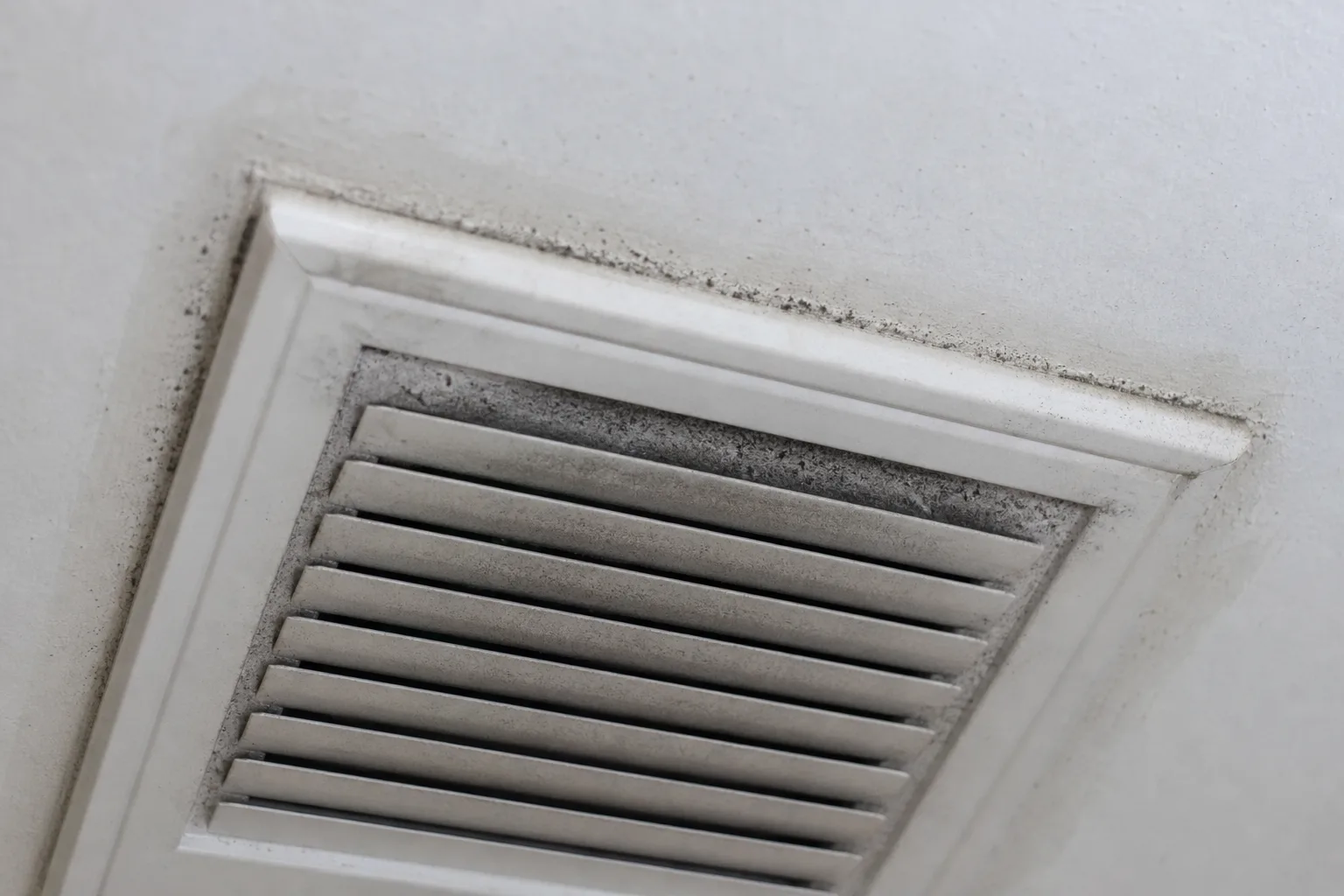
You see black specks on the slats of a register, a dark film inside the first stretch of duct or a smear around a return grille. A musty odor when the system starts tells you the same thing without the specks.
Guide · black mold removal
Black Mold in Air Vents
Black mold in air vents shows as dark specks on a register, a grille or the first stretch of duct, and your blower then pushes that growth through every room on the system. Black mold in air vents is a removal job for a local mold removal specialist, and one call connects you with one who serves your area. The connection is free.
Check your ZIP code
Enter the ZIP code of the property to see whether it is in the coverage area for mold removal connections.
Call (713) 979-1653What you are seeing
Dark Specks on Your Registers and Grilles
Dust wipes off a register and stays off. A film that returns within weeks, or that sits inside the duct where your cloth cannot reach, belongs to a removal job.
What waiting costs
How Condensation Builds a Film Inside the Duct
Cold supply air meets warm, humid air outside the duct wall, and water forms on the sheet metal and on the fiberglass liner. The liner and a layer of dust hold that water, so the duct turns into a damp, dark surface that growth settles on.
A clogged condensate line or a rusted drain pan at the air handler adds standing water at the source. Your blower then moves airborne particles from that spot into every branch.
Housing and construction
What the Blower Spreads Through Your Rooms
Every cooling cycle moves whatever sits in the duct, and the rooms at the end of a long run get the heaviest load because the air arrives there last and lingers longest.
A film in one trunk line reaches the bedrooms, the hallway and the return side, and the fallout settles on your carpet, curtains and furniture in each of them.
Lined duct cannot be reused once growth is in the liner. Each month of operation turns a short run into a longer one that has to come out.
Removal scope
How Removal Seals the System and Opens the Duct
Removal begins by sealing registers and returns so the blower stops pulling air through the affected runs. Filtered exhaust holds the airborne material inside the duct while lined sections come out, and the sheet metal that stays is cleaned and dried.
The air handler cabinet and drain pan are dried and the condensate line is cleared before the system is put back together. New duct sections go to an HVAC trade for the rebuild.
Dark specks on a vent or register? Call now to connect with a local mold removal specialist.
(713) 979-1653State rules and checks
When Vent Mold Means Duct Removal
Specks only on the face of a register point to a cleaning task. A film inside the boot, a damp smell at startup and water at the air handler point to the duct itself.
In that case you need the system sealed and the lined sections taken out, not a vacuum and a spray. Compare it with black mold on drywall when your ceiling around the register has stained too.
How the call works
From One Register to the Whole Duct Run
In the first weeks one grille shows specks after a humid week. By midsummer the liner behind it stays damp through the whole cooling season. After a year the film runs from the air handler to the farthest branch.
The sooner you call, the fewer runs you lose, and the shorter the rebuild is for your system, your ceiling plenum and your return trunk included.
Leave it undisturbed
Shut Down the System and Make the Call
Do not brush a register, run the blower to dry the duct or open a cover with the fan going. Moving air through a film spreads it. Switch the system off at your thermostat and leave the covers shut.
In a hot state such as mold remediation in Texas, a system that sweats all summer builds a film quickly. Use the free black mold removal connection before the next cooling cycle.
Common questions
Air Vent Mold Questions
Can I keep running the air conditioner while I wait?
Running it pushes air across the film and into every room on the system. Switch it off at the thermostat and call.
Does removal replace the whole duct system?
Removal replaces the lined or porous sections the growth reached and cleans the sheet metal that stays. The extent follows the growth.
Why does the growth return to the same vent?
Condensation or standing water at the air handler keeps feeding it. Removal dries that source before the duct is closed.
Black mold keeps spreading while the material stays damp.
Call before it reaches the next wall, the framing behind it or the room above.