
You notice gray-black freckles on your window casing, on the back panel of a bedroom closet or on the ceiling of a sunroom. The paint around a picture window puckers, and a coat hung against an outside wall smells of mildew. Touch nothing and close the closet door.
State · black mold removal
Mold Remediation in New Jersey
Black growth on window trim, on the back wall of a closet or on a sunroom ceiling calls for mold remediation in New Jersey, and the first move is to leave the surface as you found it. One call connects you with a local mold removal specialist who serves your town, at no charge to you.
Local conditions
What shapes black mold in New Jersey
Climate and moisture
ClimateNew Jersey averaged 47.6 inches of precipitation a year from 1991 to 2020, 13.6 inches of it from June through August, and its December-to-February average temperature was 34 degrees Fahrenheit. Source: NOAA National Centers for Environmental Information, Climate at a Glance, Statewide Time Series (mean of the yearly values 1991-2020), retrieved 2026-11-12.
Year-round rain keeps roof, wall and crawl space leaks active in every season; materials that get wet and stay wet are where growth starts.Housing stock
HousingThe median housing unit in New Jersey was built in 1971, and 61 percent of the state's housing units were built before 1980. Source: U.S. Census Bureau, American Community Survey (ACS 2024 1-year), tables B25035 and B25034, as published by Census Reporter, retrieved 2026-11-12.
Older plumbing, roofing and wall assemblies have had more years to leak, and repeated wetting behind finished surfaces is where growth is found.Check your ZIP code
Enter the ZIP code of the property to see whether it is in the coverage area for mold removal connections.
Call (713) 979-1653What you are seeing
Growth on Window Trim, Closet Walls and Sunroom Ceilings
In a New Jersey home the first clue usually sits at a cold edge: a window sill, a flue crown or a porch roof tie-in. Moist air from your showers and kitchen settles there each night and drenches the casing, and a stoop landing or a jalousie porch adds more of it.
What waiting costs
Salt Air and Constant Rain
Across the 1991 to 2020 normals, New Jersey received 47.6 inches of yearly precipitation, 13.6 of them in the warmest three months. Its winters ran at 34°F, close enough to freezing that a drenched board rarely dries by frost alone.
Rain arrives throughout the calendar, so a failing roof edge or a cracked corner of stucco takes a fresh drenching again and again. Breezes off the water hold moisture on wood shake, aluminum siding and exterior casing, and it finds the gap behind them.
A crawl vent that faces the weather lets more in. A windowless bath in a Turnpike-corridor townhouse sends steam onto your ceiling every morning, and August dew points keep the paint tacky long after you step out.
In Hoboken and Jersey City, rooftop decks over a flat membrane drain slowly, and your top-floor ceiling pays for it. In the Pine Barrens, a cabin on piers breathes humid air through your floor, and a sandy yard holds the damp under it.
Housing and construction
Shore Bungalows, Twins and Garden Flats
A shore bungalow squats on piers or block, with thin walls and a heating season that ends in April and resumes in October. Shut up through the off-season, it traps whatever moisture got in. A tub surround that leaks into the wall below is covered in black mold in a shower. A twin in Newark, Paterson or Camden shares a party wall, so a gutter that fails on one side drenches the overhead panel on the other. Garden-court flats stack kitchens and baths on a common pipe chase.
Framing drenched behind shake siding is covered in black mold on wood. A split-level from the suburban boom adds a flat-roofed carport and a sunroom, and each joins the main roof with a seam that opens a little every year. Victorian cottages in Ocean Grove, Cape May and Asbury Park keep wraparound porches, gingerbread brackets and drop siding, so blown rain lingers behind every trim board. A Cape Cod in Bergen County hides its weak spot in a dormer cheek wall, and a Monmouth County rambler hides it at the slab edge your carpet covers.
Removal scope
What Black Mold Removal Covers in New Jersey Homes
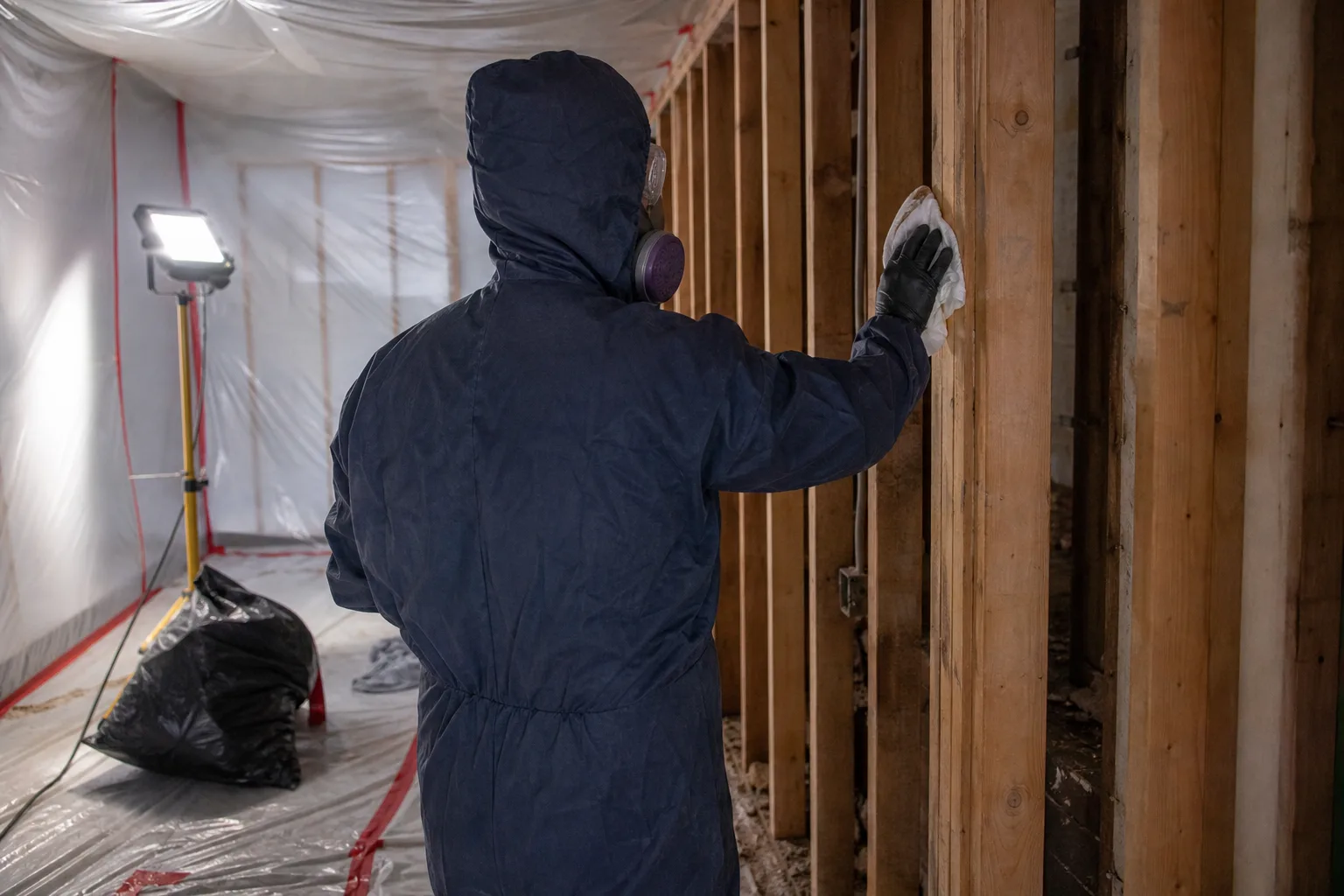
Professional black mold removal begins by wrapping the room in a sealed membrane, which keeps dust off the rest of your floor. Casing, wallboard, ceiling texture and insulation that carry growth are cut out and carried away in lidded bins, and wood shake and the boards under it come off in sections on an exterior-wall job. The studs and joists are dried to bare lumber.
The scope names the entry point, whether a flue crown, a window flange or a flat-roof seam, because removal that ignores it returns with the next rain. Roofers, masons and carpenters make the repair, and removal covers the damaged material only. A sunroom slab or a carport overhead is handled the same way when growth has traveled there.
Black growth on window trim or a closet wall in New Jersey? Call to connect with a local mold removal specialist.
(713) 979-1653How the call works
From a Flat-Roof Puddle to a Stained Bedroom
A flat porch roof holds a puddle after a downpour in high summer, and the seam beneath it lets the water through. Within weeks the bedroom overhead shows a tan halo, and by midwinter the paint blisters and the gypsum sags.
A shore house that closes for the off-season hides the whole sequence until spring. Your call at the first halo keeps the job to one bedroom overhead, and a roof leak that reaches the rafters follows the pattern in black mold in an attic.
Local detail
New Jersey Housing Age
New Jersey houses date to 1971 at the midpoint, and 61 of every 100 units went up before 1980 (2024 census tables). That is decades of rain, salt air and winter condensation working on your roof, casing and ceilings.
State rules and checks
Owners, Tenants and Condo Boards
If you own a house, call at the first sign and show the stain to your roofer. If you own a condo, report it to the board or the management desk, because the roof, the pipe chase and the exterior wall are shared.
If you lease, write your owner and request a specialist for your address. A shore house opened in May shows what a clammy off-season left behind, and your call is the same. US Black Mold Removal explains how the free connection works.
Leave it undisturbed
Leave the Surface Alone and Phone
Do not paint over the stain or press a towel against it, because covering damp casing traps the moisture and rubbing spreads the growth.
Close the door, turn off a leaking supply line at its valve and pick up the phone. Neighboring Pennsylvania homeowners face deep freezes, and your steps match theirs.
Common questions
New Jersey Homeowner Questions
Why does black mold keep returning in New Jersey homes near the water?
Rain falls all through the calendar and bay breezes hold moisture on casing and shake. Growth returns in any spot where your materials remain drenched.
Can a flat porch roof cause growth on the ceiling below?
A seam that lets water through drenches the gypsum beneath it. A tan halo on your ceiling is the signal to call.
What happens to wallboard that carries growth?
Wallboard and ceiling texture that carry growth are cut out in sections. Sound gypsum beyond the growth remains.
Does the call cost anything?
The connection carries no charge. You agree on any work directly with the specialist you reach.
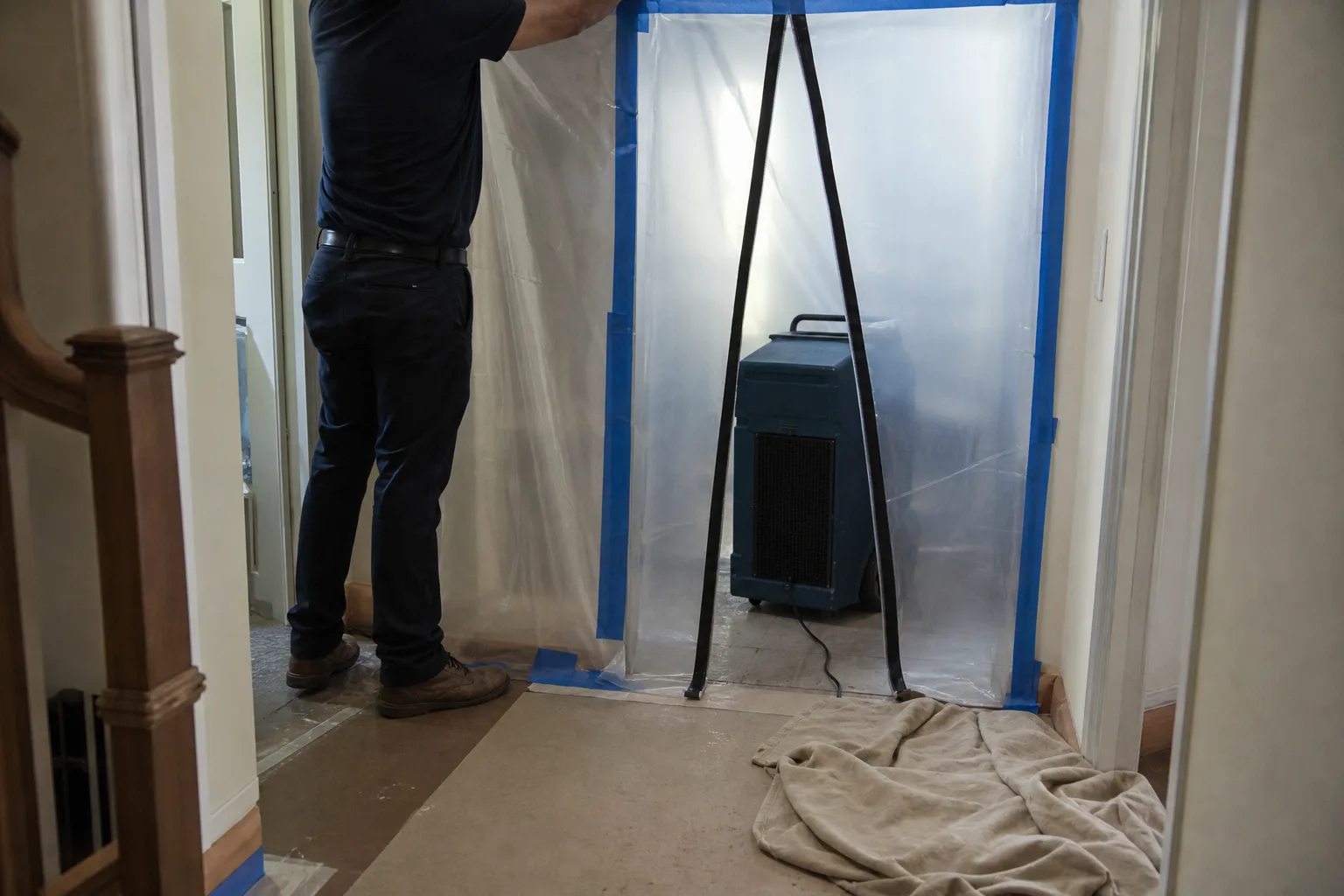
Black mold keeps spreading while the material stays damp.
Call before it reaches the next wall, the framing behind it or the room above.