
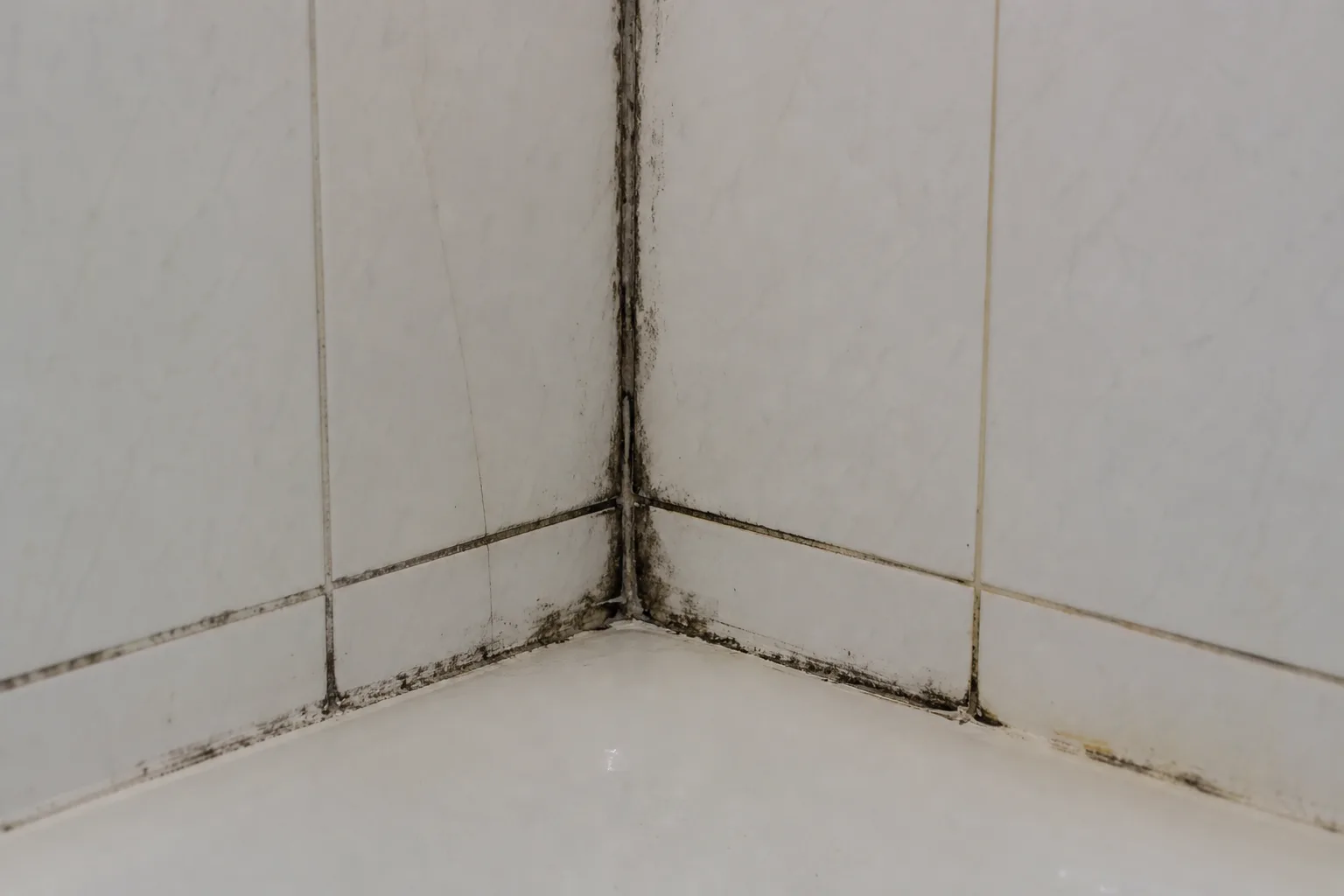
You notice dark blotches on the ceiling beneath your duct alcove, behind a washer or in a ring around a bath vent. The gypsum there feels cool and spongy, and the shelf inside the alcove gives off a sour odor. Touch none of it and pull that door closed.
State · black mold removal
Mold Remediation in Texas
Black blotches on the ceiling under a duct alcove, on a laundry-room wall or in a ring around a bath vent call for mold remediation in Texas, and the first move is to leave them undisturbed. One call puts you in touch with a local mold removal specialist for your area, and the connection carries no fee.
Local conditions
What shapes black mold in Texas
Climate and moisture
ClimateTexas averaged 28.6 inches of precipitation a year from 1991 to 2020, 8.0 inches of it from June through August, and its December-to-February average temperature was 49 degrees Fahrenheit. Source: NOAA National Centers for Environmental Information, Climate at a Glance, Statewide Time Series (mean of the yearly values 1991-2020), retrieved 2026-11-12.
Year-round rain keeps roof, wall and crawl space leaks active in every season; materials that get wet and stay wet are where growth starts.Housing stock
HousingThe median housing unit in Texas was built in 1994, and 31 percent of the state's housing units were built before 1980. Source: U.S. Census Bureau, American Community Survey (ACS 2024 1-year), tables B25035 and B25034, as published by Census Reporter, retrieved 2026-11-12.
Newer, tighter construction holds moisture indoors when a leak or a ventilation fault goes unnoticed behind finished surfaces.State mold rules
State rulesTexas issues state licenses for mold remediation businesses and registers mold remediation workers through the Texas Department of Licensing and Regulation, which publishes a public license search. Source: Texas Department of Licensing and Regulation (TDLR), mold program page, retrieved 2026-11-12.
A Texas owner can look up a remediation business in the state license search before work begins.Check your ZIP code
Enter the ZIP code of the property to see whether it is in the coverage area for mold removal connections.
Call (713) 979-1653What you are seeing
Growth Under Duct Alcoves, on Laundry Walls and Around Vents
Moisture arrives quietly in a Texas house. A condensate pan overflows overhead, a trunk duct beads above your hall, or a copper leg seeps inside a partition, and your paint stays smooth over a soaked panel for weeks.
What waiting costs
Why Mild Winters Never Dry Anything Out
Across the 1991 to 2020 normals, Texas received 28.6 inches of precipitation a year, with 8.0 inches of it falling in the summer months. Its winters ran a mild 49°F, so a soaked panel never meets a hard freeze that would slow the spread.
When hail splits your shingles or a brick veneer joint opens, storm runoff reaches roof decking and cavities in every month. Cooling adds a second source: chilled air in the trunk duct meets humid attic air, and condensation forms on duct skin, plenum joints and condensate lines, then drips onto the gypsum below.
Housing and construction
Airtight Slab Homes and Older Raised Floors
An airtight, well-insulated envelope holds the moisture a leak releases, so a stained ceiling stays inside the cavity instead of venting out. A post-tension slab hides a pinhole in a copper leg until your wall base darkens, and you see nothing before then.
A garage that shares framing with your living room passes the damp along. Older raised floors on piers soak the subfloor from below, a pattern covered in black mold in a crawl space.
Condensation along duct runs ends at your registers, as black mold in air vents explains. A subdivision home from the building boom often carries thin insulation overhead, builder-grade drain lines and a roof deck that lingers soggy after a storm.
Along the Gulf near Galveston, humid air condenses on a cold slab edge. In the Hill Country, a limestone sill wicks ground moisture, and in the Panhandle a flash flood across a garage threshold drenches the stud wall behind it.
Removal scope
What Black Mold Removal Covers in Texas Homes
Professional black mold removal starts with a poly barrier across the doorway and a taped return grille, so the debris stays out of the cooled rooms you still use. Soaked gypsum, trim boards and batt insulation come out in sealed totes, and the studs and sole plates are dried back to sound lumber.
Duct boots and plenum joints that dripped condensation count as the route the moisture took, so removal that skips the origin returns with the next cooling season. On a slab job, the soaked wall base and the first course of board above it come out together. The opened wall then goes to the drywall finisher and the paint crew. The air-handling trade repairs the duct, and removal covers only the growth.
Black growth under a duct alcove or on a laundry wall in Texas? Call to connect with a local mold removal specialist.
(713) 979-1653How the call works
From a Dripping Duct to a Soft Ceiling
A duct drips onto your hall ceiling in June, and by July a brown ring has formed. By late summer the panel is mushy, growth reaches the insulation above it and the attic floor is soaked as well, the scene laid out in black mold in an attic.
Storms offer a faster route. A squall line drives rain under a lifted ridge cap and a hailstone chips a vent boot, so the roof decking drinks overnight and the ceiling below follows within the week.
Texas heat keeps this going through the year, since a hard cold snap rarely pauses it. Your call at the first ring limits the job to one ceiling panel and spares the rooms beside it.
Local detail
Texas Housing Age and the State License Search
Half of Texas homes went up after 1994, and just 31 percent predate 1980, according to the Census Bureau's 2024 counts. The Texas Department of Licensing and Regulation issues state licenses to mold remediation businesses, registers remediation workers and publishes a public search. You can look a business up there before work begins; the line is general information and says nothing about your rights.
State rules and checks
Owners, Tenants and Property Managers
If you own the house, call as soon as you see growth. If you rent, take a picture of the blotch, hand it to the leasing office and request a specialist for the building. A garage apartment or a duplex shares a rafter line and a drain stack, so notify the neighbor as well.
Cul-de-sac homes in the Dallas suburbs, brick one-stories around San Antonio and coastal houses near Houston fail in different spots, yet your call is identical. See how US Black Mold Removal makes the connection before your call.
Leave it undisturbed
Leave It Alone and Make the Call
Do not tape plastic over the blotch or leave your system blower on constant, because moving air carries debris into your clean rooms.
Shut the door, close the stop valve under a leaking sink or toilet, and phone. Owners in Massachusetts mold remediation see a very different climate, yet your steps match.
Common questions
Texas Homeowner Questions
Why does black mold appear in Texas homes with mild winters?
Mild winters never dry a soaked panel, and cooling adds duct condensation. Growth keeps going wherever your materials remain wet.
Does a dripping duct count as a mold problem?
A duct that drips onto gypsum soaks the panel on every cooling day. Dark blotches below it mean you should call before the ceiling goes spongy.
Where can I look up a Texas mold remediation business?
The Texas Department of Licensing and Regulation runs a public license search for remediation businesses and workers. Check it before work begins.
Who repairs the duct or the copper leg?
A trade for that system corrects the origin. Removal covers the material that already carries growth.
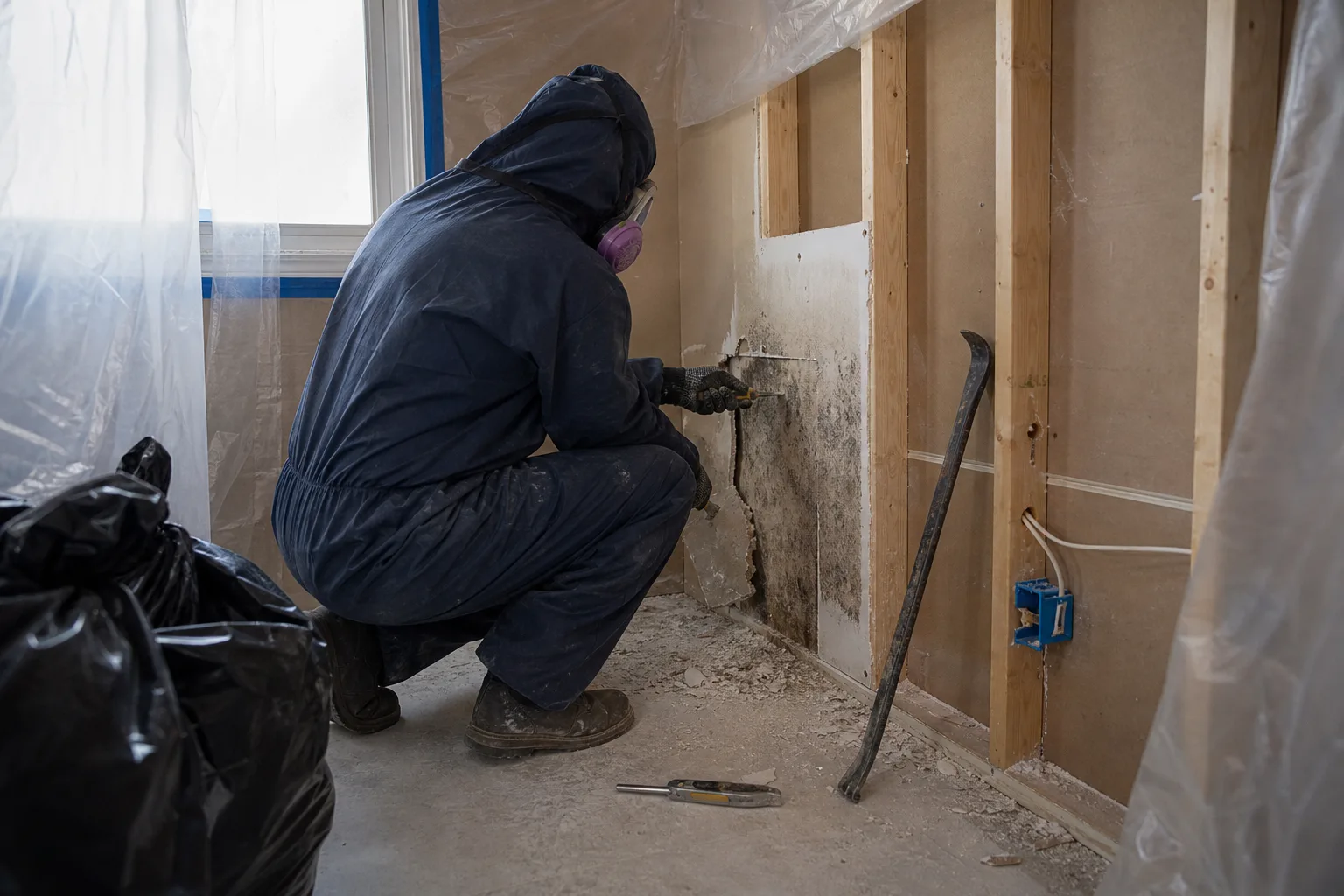
Black mold keeps spreading while the material stays damp.
Call before it reaches the next wall, the framing behind it or the room above.