
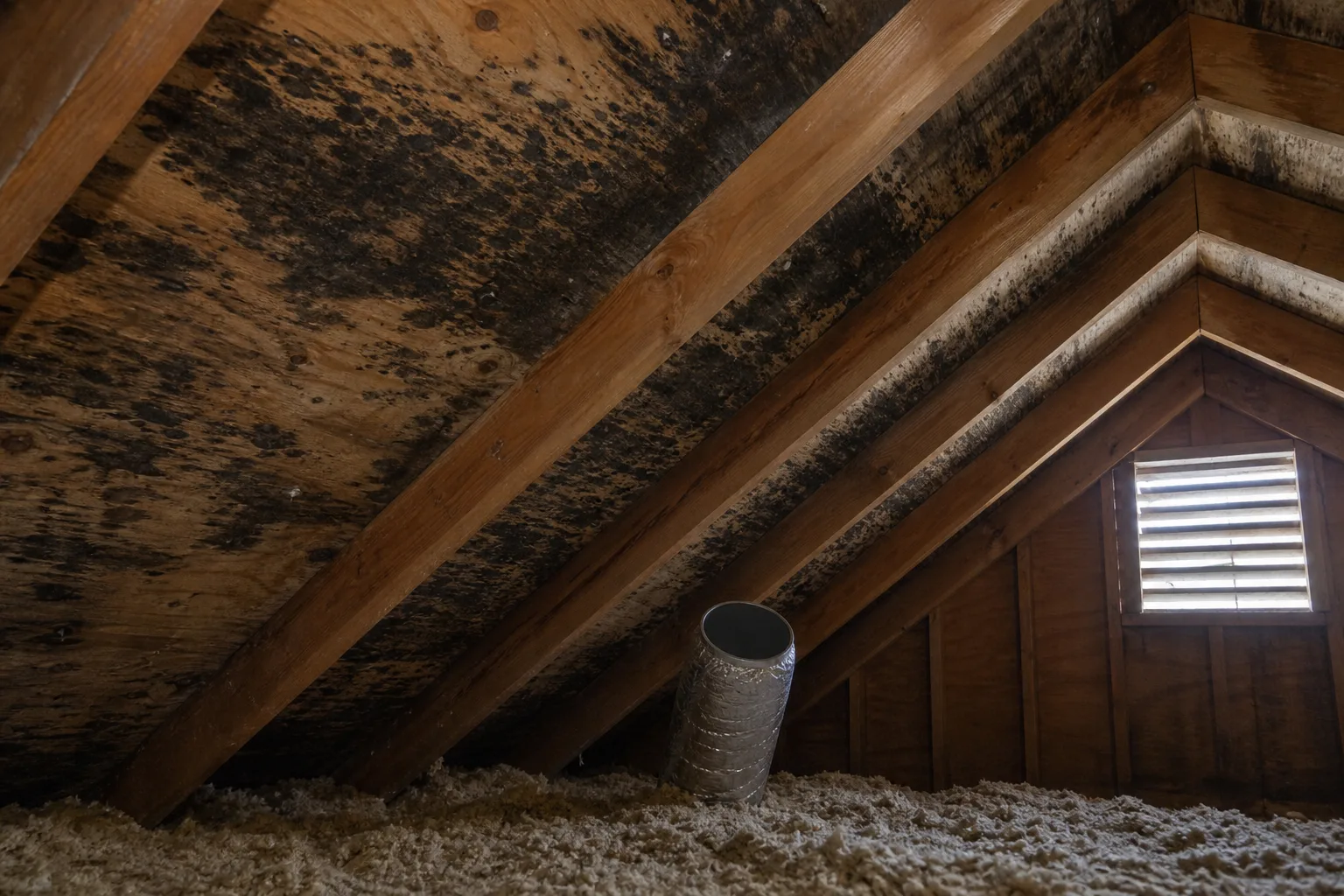
You spot black patches on the plywood under the roof, gray stains around the nail tips or dark streaks down the rafters. Frost on the nails in winter and a damp smell when the hatch opens often come with it.
Guide · black mold removal
Black Mold in an Attic
Black mold in an attic shows as dark patches on the roof plywood, the rafters or the insulation, and it grows on the bottom face of the deck where warm air meets a cold roof. Black mold in an attic is a removal job for a local mold removal specialist, and one call connects you with one who serves your area. The connection is free.
Check your ZIP code
Enter the ZIP code of the property to see whether it is in the coverage area for mold removal connections.
Call (713) 979-1653What you are seeing
Dark Patches on Roof Plywood and Rafters
Black mold on plywood in the attic usually starts along the lowest edge of the roof, at the eaves. Insulation there mats down and discolors, and the ceiling in the top-floor rooms can show a faint brown ring.
What waiting costs
How Warm Air Soaks the Roof Deck
Warm, moist air from the rooms leaks up around light fixtures, the hatch and the bath fan duct, then forms droplets on the cold face of the roof deck. A choked soffit vent or ridge vent traps that moisture, and the plywood stays wet all winter.
A bath fan that vents into the attic rather than through the roof supplies the most water. A failed flashing or a worn shingle lets roof water in on top, so the growth keeps living on the wood for as long as the water arrives.
Housing and construction
What Wet Insulation Does to Your Ceilings
Wet insulation compresses and loses its loft, so the rooms lose warmth and the roof deck gets colder, which pulls in more moisture. Fiberglass batts and blown cellulose both keep growth in place, and you cannot dry them where they lie. Water that runs down a rafter reaches your ceiling drywall and leaves a stain in the room below.
Plywood that stays wet delaminates, and a delaminated deck makes the job a roofing job as well as a removal job. Recessed light housings and the bath fan casing poke through that insulation, and each one is a path for the stain into the ceiling below.
Dark patches on your roof plywood? Call to connect with a local mold removal specialist.
(713) 979-1653Removal scope
How Removal Works Under the Roof
Your hatch and the ceiling openings are closed off, so nothing drops into the rooms below while the work runs. Wet insulation is bagged and carried out, and growth is removed from the plywood and the rafters that remain.
Sheathing that has delaminated is cut out. Your attic is dried, and the ventilation fault is identified so a roofer or ventilation trade can correct it before new insulation goes in.
A roofer then replaces any soaked decking panels, and a ventilation trade sets baffles at the eaves so the new insulation no longer chokes the soffit.
State rules and checks
When Attic Growth Needs a Specialist
A few dark spots near a vent look small. Growth that covers more than a sheet of plywood, runs along several rafters or sits in your insulation belongs to removal, because you cannot reach that area from one hatch.
The same logic applies to black mold on wood anywhere in your framing, and to black mold in a crawl space at the other end of the house. Each needs the water source closed along with the growth.
How the call works
From Frosted Nails to a Soft Roof Deck
In the first winter the nail tips frost and your plywood darkens at the eaves. By the second the stain climbs the rafters and the insulation mats down.
After several years the deck softens and the ceiling below carries a stain that will not dry. A call at the first dark patch keeps your job to the sheathing and the insulation.
Leave it undisturbed
Keep the Hatch Closed and Stay Below
Do not go up to look, pull insulation out or run a box fan through the hatch. Your footsteps and a fan dislodge growth, and an open hatch lets it drop into your hallway. Keep the hatch closed.
Roofs in mold remediation in New York sit over warm houses all winter, a setup that suits growth. Reach the free black mold removal connection when your first stain appears.
Common questions
Attic Mold Questions
Does a roof leak cause mold in the attic?
A leak is one source. Warm air from your rooms is more common, and it stains the deck the same way, so removal names the source before the insulation goes back.
Does my insulation have to be replaced?
Insulation that holds growth is removed and bagged because you cannot dry it in place. Clean batts away from the affected area often stay.
Why does attic plywood turn black in winter?
Warm air from the rooms below meets the cold roof deck. The same plywood stays drier in warm months, so your growth shows up as a winter pattern.
Where does attic mold usually start?
At the eaves, where the roof is coldest and your insulation sits closest to the deck.
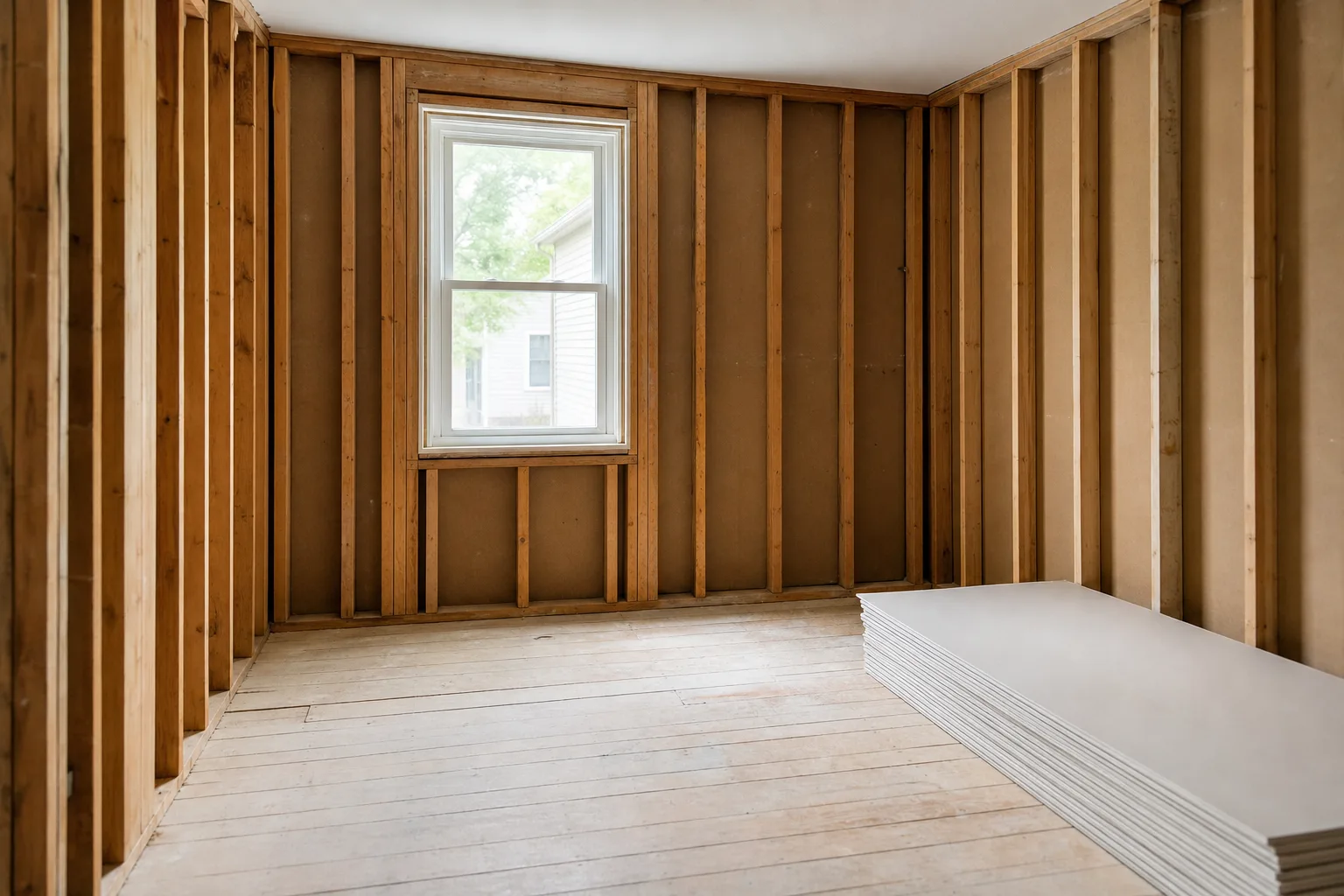
Black mold keeps spreading while the material stays damp.
Call before it reaches the next wall, the framing behind it or the room above.