
You find dark patches on the plaster behind your cast-iron radiator, on a bathroom ceiling that keeps staining or along the party wall of a brownstone. Window corners in a prewar apartment show it where cold sash glass meets warm room air.
State · black mold removal
Mold Remediation in New York
Black growth on a plaster wall behind a radiator, on a bathroom ceiling in a co-op or along a brownstone party wall calls for mold remediation in New York, and the first move is to let the growth be. One call puts you in touch with a local mold removal specialist who serves your building, at no cost to you.
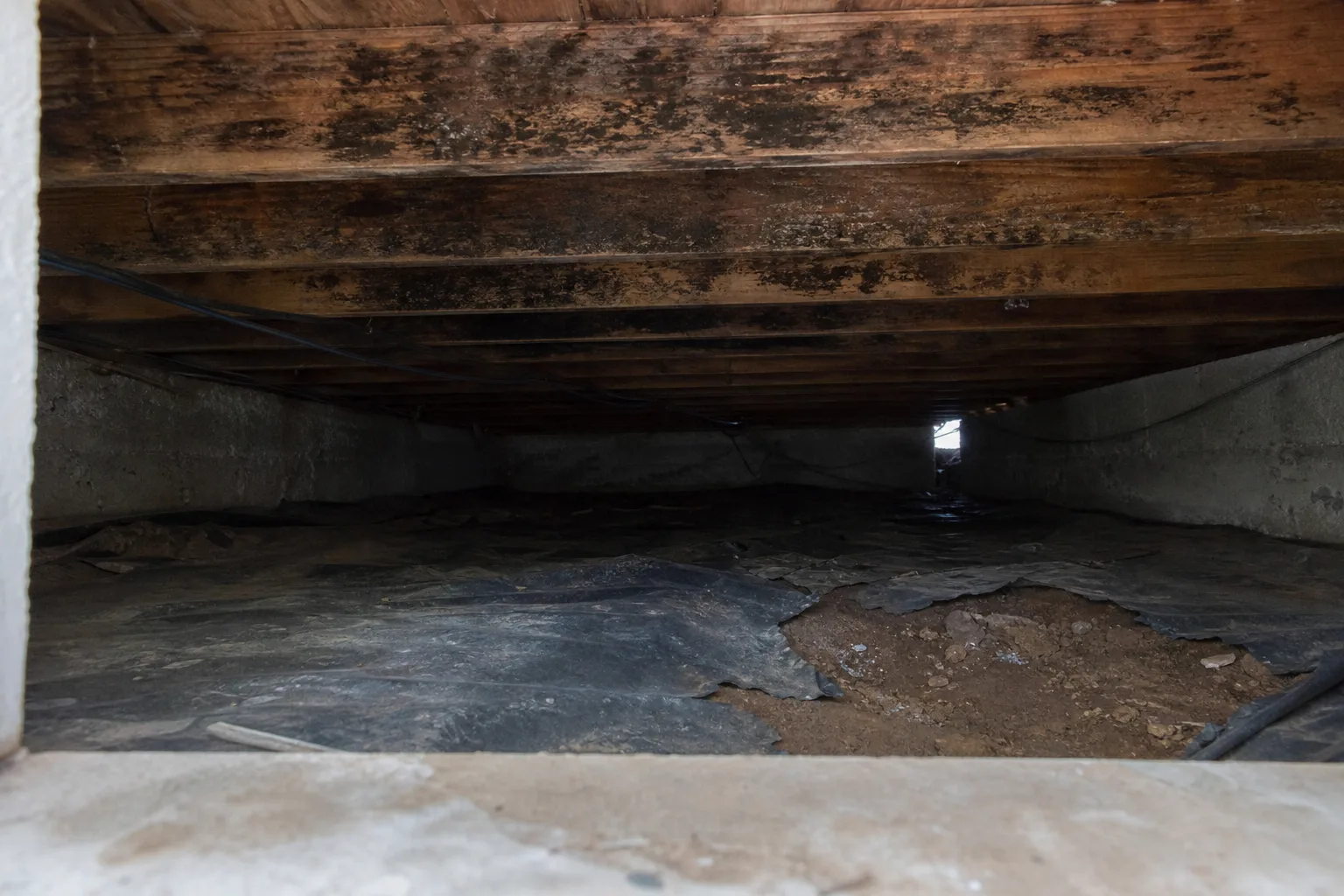
Local conditions
What shapes black mold in New York
Climate and moisture
ClimateNew York averaged 43.5 inches of precipitation a year from 1991 to 2020, 12.5 inches of it from June through August, and its December-to-February average temperature was 24 degrees Fahrenheit. Source: NOAA National Centers for Environmental Information, Climate at a Glance, Statewide Time Series (mean of the yearly values 1991-2020), retrieved 2026-11-12.
Winters that average below freezing put snowmelt and ice at the roof edge and foundation; materials that get wet and stay wet are where growth starts.Housing stock
HousingThe median housing unit in New York was built in 1959, and 73 percent of the state's housing units were built before 1980. Source: U.S. Census Bureau, American Community Survey (ACS 2024 1-year), tables B25035 and B25034, as published by Census Reporter, retrieved 2026-11-12.
Older plumbing, roofing and wall assemblies have had more years to leak, and repeated wetting behind finished surfaces is where growth is found.State mold rules
State rulesNew York's Labor Law, Article 32 (sections 930 to 948), sets state license rules and minimum work standards for mold remediation. Source: New York State Senate, Open Legislation, Labor Law Article 32, retrieved 2026-11-12.
A New York owner can ask any remediation business for its state license before work begins.Check your ZIP code
Enter the ZIP code of the property to see whether it is in the coverage area for mold removal connections.
Call (713) 979-1653What you are seeing
Growth Behind Radiators and on Bath Ceilings
In a building with shared walls, the water behind your patch often starts in another apartment or inside a riser. You may never see that source, which is why the growth is your first clue.
What waiting costs
Steam Heat, Risers and Cold Walls
New York's rain and snow came to 43.5 inches a year over 1991 to 2020, and winter months ran at 24°F. A one-pipe steam radiator pushes warm, wet air against an exterior wall that hovers near freezing, and condensation forms on the cold plaster behind it.
A weeping radiator valve, a shared supply riser or a blocked roof drain adds water from above. Wet plaster and lath hold it for weeks, and growth follows the damp up and across your wall. Bathrooms packed into a former parlor or a converted floor-through share one stack, so a single failed gasket dampens the rooms above and below it.
Housing and construction
Brownstones, Cooperatives and Walkups
Brownstones carry masonry walls, plaster over lath and original cast-iron risers that serve several floors. A cooperative or walkup adds a shared roof, stacks and boiler room, so a leak in one place wets finishes in three.
A railroad flat or a prewar six-room apartment keeps its original bathroom on the building's wettest stack, and tile set in a mortar bed hides a wet wall for years.
A ceiling stain under a neighbor's tub shows how far water travels. Growth on plaster behaves like mold on wallboard in newer walls, and a shower leak follows the path in black mold in a shower.
What waiting costs
Parapets, Cornices and Boiler Rooms
Not every leak starts under a tub. A cracked parapet lets rain behind the brick, a cornice that drains the wrong way soaks the top-floor wall, and a boiler room pipe that drips for a season wets the plaster above it. A leaking areaway at garden level carries water inward the same way.
Those sources belong to the mason, the roofer and the building's plumber. Your removal scope covers the plaster, lath and trim that already carry growth, and the building fixes the water so that it does not return. Queens two-family homes, Hudson Valley farmhouses and upstate Victorians fail in their own ways, with a cellar window well or a porch roof leading the list.
Removal scope
What Black Mold Removal Covers in Apartments and Brownstones
Professional black mold removal in a multi-unit building starts with sealing your apartment from the hallway and stairwell, so growth stays out of shared space.
Wet plaster, lath, ceiling board and trim that carry growth come out in sealed sacks, and the exposed studs and joists are dried to bare, sound wood. The scope stops at your unit's boundary. The opened wall then goes to the trades that rebuild it.
Black growth behind a radiator or on a bath ceiling in New York? Call to connect with a local mold removal specialist.
(713) 979-1653How the call works
From a Riser Leak to Two Damaged Units
A riser weeps for a few weeks, and the ceiling in the apartment below shows a brown ring. After a few months the plaster turns soft, growth spreads to the lath, and the next unit down reports the same stain.
A superintendent can shut a riser valve and a managing agent can schedule access, and removal work needs a clear hallway and a freight elevator reservation. Tell the agent early so neighbors get notice.
Every floor the water crosses adds material to remove and another household to coordinate. Your call at the first ring keeps the job to one ceiling.
Local detail
New York Housing and Labor Law Article 32
Nearly three in four New York housing units (73 percent) predate 1980, and the usual build year is 1959 (American Community Survey, 2024). Labor Law Article 32 sets state license rules and minimum work standards for mold remediation, so you can ask any remediation business for its state license before work begins. This is reference reading, not legal counsel.
State rules and checks
Tenants, Shareholders and Managing Agents
If you rent, put the growth and the leak in writing to the building owner or managing agent, then ask for a specialist serving your address.
If you hold shares in a cooperative, notify the board and the managing agent, because the source may sit in a common system. Your call stays the same in every case. See how US Black Mold Removal connects you before you dial.
Leave it undisturbed
Leave It Alone and Phone Early
Do not brush the wall or pull the radiator cover over the damp plaster, because disturbed growth drifts into your clean rooms.
Shut the room door and switch off any box fan that blows across the surface. Owners in Massachusetts mold remediation manage aging buildings too, and your steps match: tell the building, leave the growth and call.
Common questions
New York Building Questions
Why does black mold form behind radiators?
A steam radiator warms wet air against a cold exterior wall, and condensation forms on the plaster. Growth follows where your plaster stays damp.
Who handles a leak that starts in a neighboring unit?
The building's plumber or roofer closes the source, and a mold removal specialist handles the growth in your unit. Report both in writing to the owner or board.
Can plaster and lath be saved?
Wet plaster that carries growth is cut out with its lath. Sound plaster beyond the growth stays in place.
Should I ask a remediation business for its license?
Yes. Article 32 of the Labor Law sets license rules for mold remediation, so you can ask for the state license before work begins.
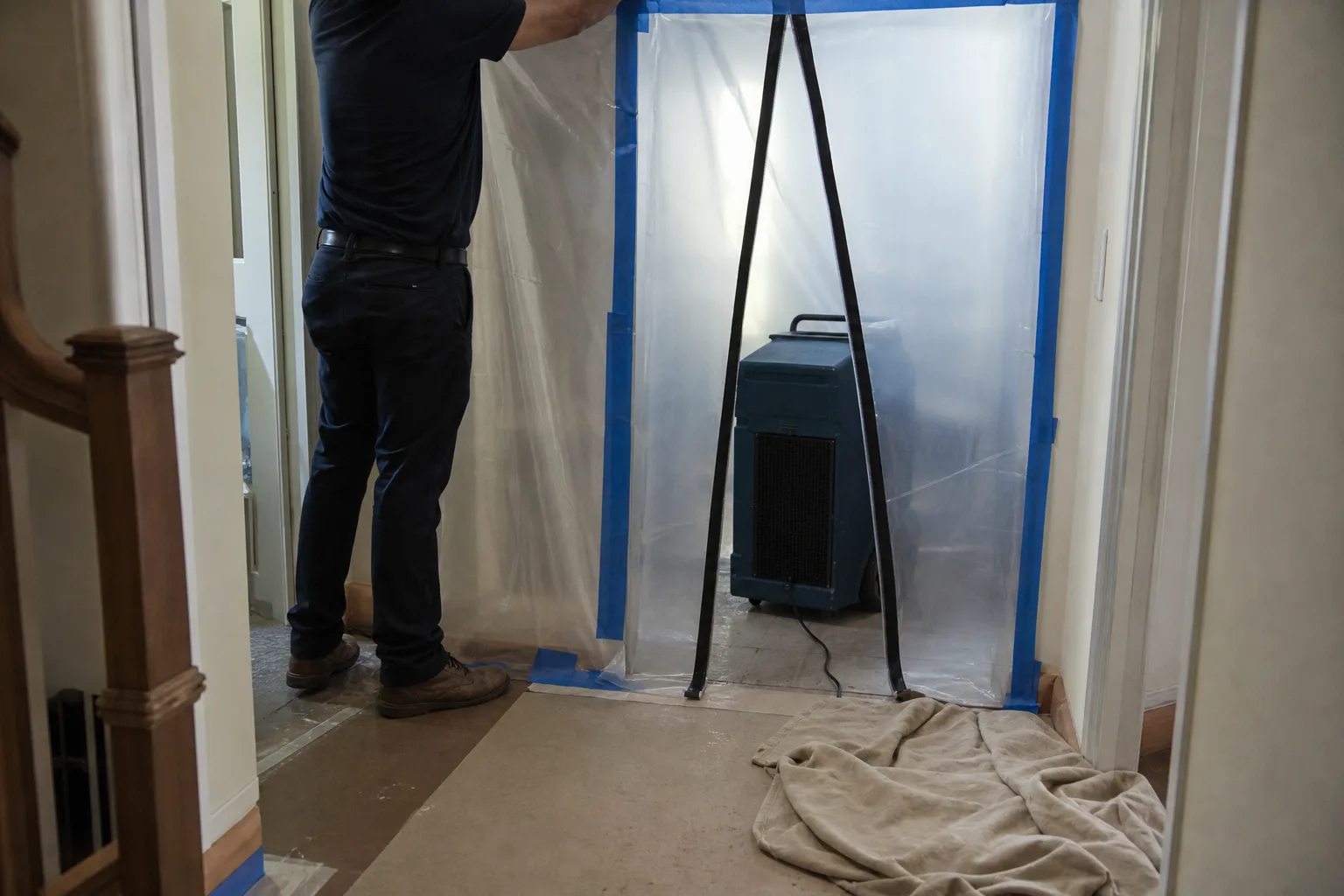
Black mold keeps spreading while the material stays damp.
Call before it reaches the next wall, the framing behind it or the room above.