
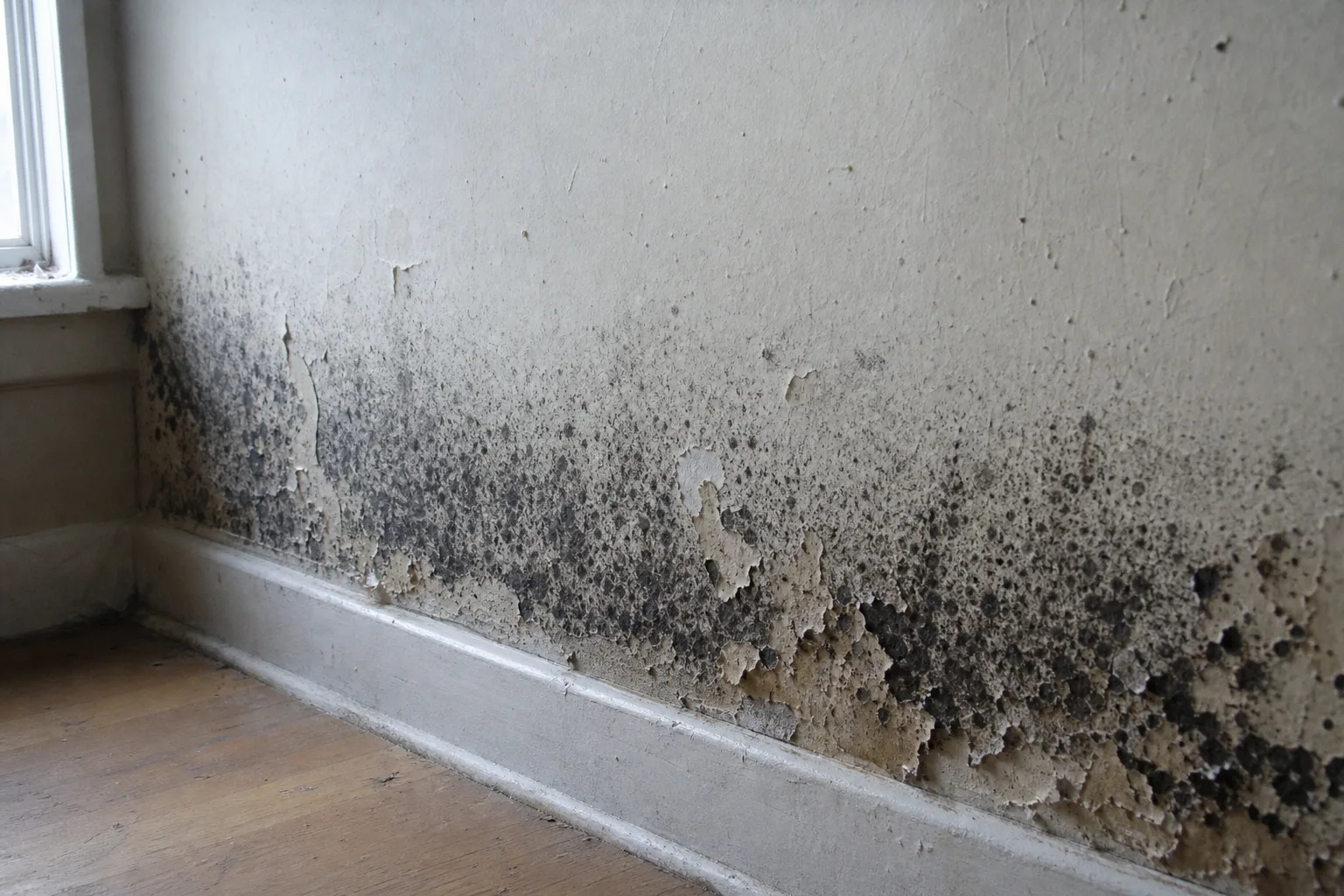
You spot dark growth along a baseboard where a stucco wall meets the slab, or a soft, stained floor inside the cabinet under a bathroom sink. A wall that backs onto the utility room or shower often darkens first, because the leak behind it stays out of sight.
State · black mold removal
Mold Remediation in California
Black spotting on a ceiling under a bathroom, along a slab-edge baseboard or inside a sink cabinet calls for mold remediation in California, and the first move is to leave the growth undisturbed. One call connects you with a local mold removal specialist who serves your area. The connection is free.
Local conditions
What shapes black mold in California
Climate and moisture
ClimateCalifornia averaged 22.3 inches of precipitation a year from 1991 to 2020, 0.7 inches of it from June through August, and its December-to-February average temperature was 45 degrees Fahrenheit. Source: NOAA National Centers for Environmental Information, Climate at a Glance, Statewide Time Series (mean of the yearly values 1991-2020), retrieved 2026-11-12.
With almost no summer rain, visible growth usually traces to a plumbing leak, a wet-season roof leak or poor ventilation instead of the weather.Housing stock
HousingThe median housing unit in California was built in 1977, and 55 percent of the state's housing units were built before 1980. Source: U.S. Census Bureau, American Community Survey (ACS 2024 1-year), tables B25035 and B25034, as published by Census Reporter, retrieved 2026-11-12.
Older plumbing, roofing and wall assemblies have had more years to leak, and repeated wetting behind finished surfaces is where growth is found.State mold rules
State rulesCalifornia's Health and Safety Code has a mold chapter (Division 20, Chapter 18, sections 26100 to 26157, added in 2001); its section 26147 describes a written disclosure by residential landlords that depends on state mold standards being adopted. Source: California Legislative Information, Health and Safety Code sections 26100 and 26147, retrieved 2026-11-12.
Mold in housing is a named subject of California state code; for visible growth the practical step is still prompt professional removal.Check your ZIP code
Enter the ZIP code of the property to see whether it is in the coverage area for mold removal connections.
Call (713) 979-1653What you are seeing
Dark Spots Under Sinks and Along Slab Edges
Leave the surface alone and keep fans from blowing across it. Dry weather gives your damp no outside explanation. A patch in August points you at a supply line, a drain or a shower pan, and your next move is the call.
What waiting costs
Why Dry Summers Point to Plumbing
California's yearly precipitation came to 22.3 inches across 1991 to 2020, and only 0.7 inches of it came between June and August. With so little summer rain, growth found then traces to a pinhole supply leak, a sweating cold line or a bathroom fan that never moves its steam outdoors.
Winter flips the picture. The winter average sat at 45°F, and a winter storm that finds worn roofing darkens your ceiling or a top-floor wall. The water source sets how far the growth runs, so your removal scope follows what that water soaked.
Housing and construction
Stucco Walls, Slab Floors and Aging Framing
Stucco sheds rain but traps water behind it, so a leaking hose bib or frame corner soaks the sheathing and studs well before a stain reaches the interior paint. A slab home adds a second path: a line leaking under the slab wicks moisture into the bottom plate of the wall and the carpet tack strip. Garage conversions, casitas and hillside homes add paths of their own.
A converted garage often lacks a vapor layer under the slab, and a casita bath shares a drain line with the main house. Growth on a baseboard often means the drywall behind it is wet. A black mold on drywall patch caught early keeps your repair to one wall instead of a whole room, and a raised floor adds black mold in a crawl space to the list.
Dark growth under a sink or along a slab edge in California? Call to connect with a local mold removal specialist.
(713) 979-1653Removal scope
What Black Mold Removal Covers in California Homes
Professional black mold removal starts with plastic sheeting that walls off the affected room, so growth stays out of your dry rooms. Drywall, baseboard, carpet pad and insulation that carry growth come out double-bagged, and the framing and slab edge that remain are dried and taken back to bare, sound material.
Cut lines run past the visible edge, because paper facing carries growth further than an eye does. A shower pan or supply line still needs a plumber, as black mold in a shower explains, and your opened wall goes to the trades that rebuild it.
Local detail
California Housing and State Code
More than half of California's housing units (55 percent) went up before 1980, and the middle build year is 1977 (Census Bureau, ACS 2024). State code carries a mold chapter, Division 20, Chapter 18 of the Health and Safety Code, added in 2001, which describes a written landlord disclosure that depends on state mold standards being adopted. Consumer information only, not legal advice.
How the call works
From a Slow Drip to a Gutted Wall
Early on, a pinhole leak dampens the back of a cabinet or the foot of a wall, and nothing shows. A stain and a musty smell follow, then growth coats the paper facing and climbs into the stud bays.
A leak you ignore through a long dry summer costs the whole wall by fall. A water heater closet or a refrigerator line can drip for months behind a finished cabinet before anyone hears it.
Every stage widens the cut. Your call at the first stain keeps removal to one cabinet base or one wall panel, and it keeps the flooring and cabinetry in the repair column.
State rules and checks
Renters, Owners and Who Calls First
If you rent, send the property owner a written note about the growth and the leak behind it, then connect with a specialist serving your area. If you own a unit in a complex, the water often starts in the unit above or a shared riser, so your association belongs in the conversation.
A mid-century ranch on a slab, a 1920s bungalow on a raised foundation and a hillside split-level each fail in a different spot, so describe your house type on the call. Your removal scope depends on what the growth covers, so the call is the same for every owner and tenant. Read how professional black mold removal works, then use the call button to connect through US Black Mold Removal.
Leave it undisturbed
Leave the Growth Alone Until the Call
Keep your hands off the spotting: brushing or wiping moves growth onto clean walls and across the house.
Shut the door to the room, switch off any fan that blows across the surface and close your shutoff valve if you can trace the leak to a fixture.
Then phone. Owners in Florida mold remediation work with a wetter calendar, but you follow one order in California as well: close the valve, leave the growth and call.
Common questions
What California Owners Ask
Why does black mold show up in a California summer?
With 0.7 inches of rain from June through August, the water behind your spotting usually comes from plumbing, a sweating cold line or a bathroom that traps steam. The leak, not the weather, sets the removal scope.
Can stucco hide black mold?
Stucco keeps its outer face dry while the sheathing and framing behind it stay wet. Growth often shows first at a baseboard, a window corner or an interior closet wall.
Should I clean the spots before the call?
No. Wiping spreads growth to clean surfaces. Leave it undisturbed and connect with a specialist who removes the affected material.
Is the connection really free?
Yes. US Black Mold Removal links you with a local mold removal specialist at no cost to you, and any work is agreed between you and that specialist directly.
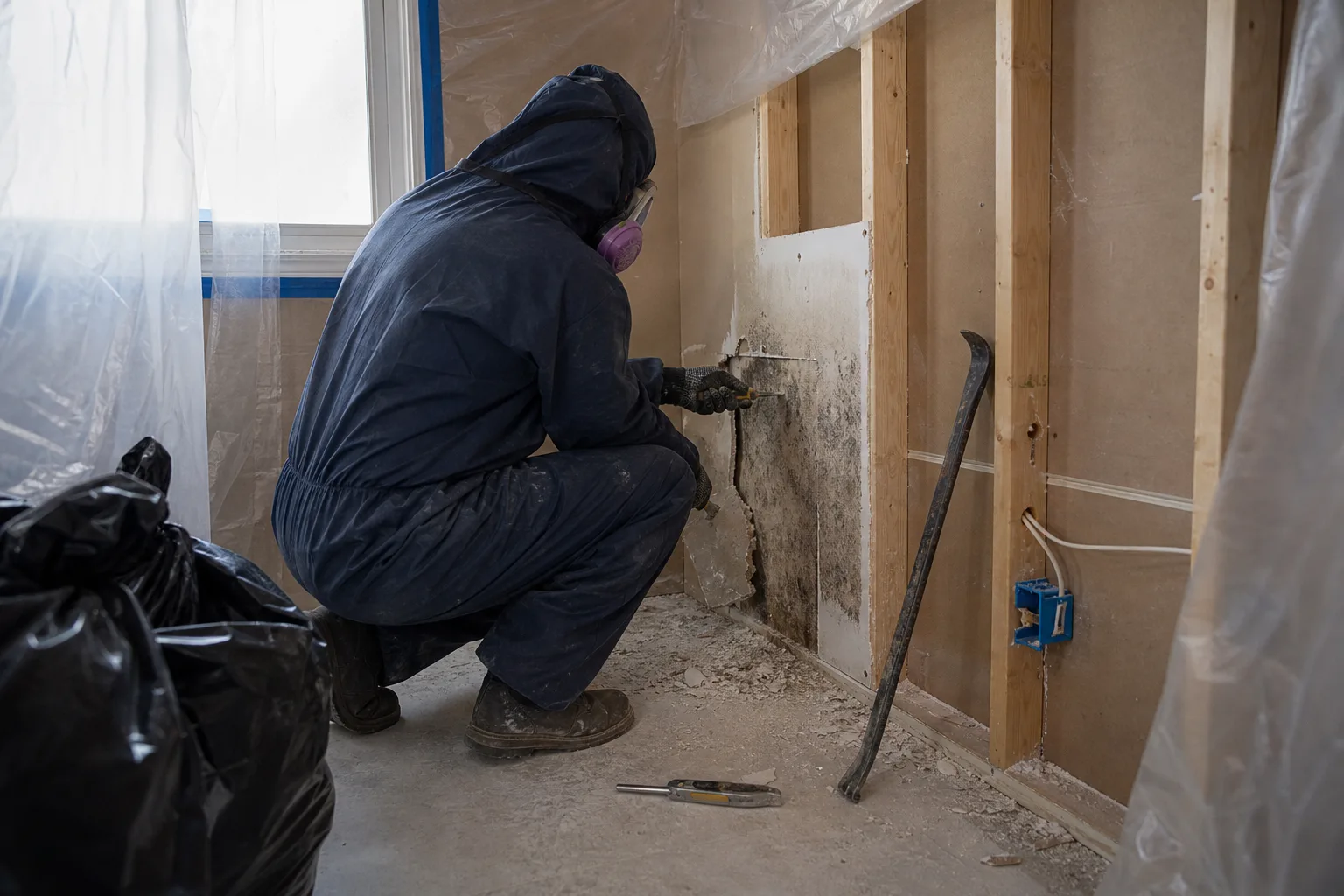
Black mold keeps spreading while the material stays damp.
Call before it reaches the next wall, the framing behind it or the room above.