
You find dark patches on a fieldstone or block cellar wall, on the bottom face of your floor joists or on a plaster ceiling below a bathroom.
State · black mold removal
Mold Removal in Pennsylvania
Black growth on a stone cellar wall, a floor joist or a plaster ceiling calls for mold removal in Pennsylvania, and the first move is to disturb nothing stored beside it. One call links you with a local mold removal specialist who serves your area, at no cost to you.
Local conditions
What shapes black mold in Pennsylvania
Climate and moisture
ClimatePennsylvania averaged 45.0 inches of precipitation a year from 1991 to 2020, 12.9 inches of it from June through August, and its December-to-February average temperature was 29 degrees Fahrenheit. Source: NOAA National Centers for Environmental Information, Climate at a Glance, Statewide Time Series (mean of the yearly values 1991-2020), retrieved 2026-11-12.
Winters that average below freezing put snowmelt and ice at the roof edge and foundation; materials that get wet and stay wet are where growth starts.Housing stock
HousingThe median housing unit in Pennsylvania was built in 1966, and 66 percent of the state's housing units were built before 1980. Source: U.S. Census Bureau, American Community Survey (ACS 2024 1-year), tables B25035 and B25034, as published by Census Reporter, retrieved 2026-11-12.
Older plumbing, roofing and wall assemblies have had more years to leak, and repeated wetting behind finished surfaces is where growth is found.Check your ZIP code
Enter the ZIP code of the property to see whether it is in the coverage area for mold removal connections.
Call (713) 979-1653What you are seeing
Growth on Fieldstone Walls, Joists and Plaster
A rowhouse cellar shows them behind stored cartons first, and a cold bedroom corner shows them behind a dresser. Utility corners, floor drains and the chilly concrete floor under an oil-burner room show it the same way.
Close your cellar door and walk away from the patch. What you see on the wall is usually the end of a water path that started outside, at a downspout, a window well or a roof edge.
What waiting costs
How a Pennsylvania Winter Wets the Foundation
Pennsylvania's rain and snow stood at 45.0 inches a year over 1991 to 2020, and winters ran at 29°F. Snow piles against your foundation, melts in a thaw and refreezes, so water works into mortar joints and hairline gaps for months.
Ice dams at the roof edge push meltwater under shingles and down inside the wall. Materials that get wet and stay wet are where growth starts, and a cold cellar dries slowly.
A coal-era cellar carries a floor drain and a clay tile line that clog with silt, so ground moisture that finds no exit rises through the slab.
Housing and construction
Window Wells, Downspouts and Grade
Check where the water goes outside before you assume the leak is inside. A leader pipe that empties beside the foundation, a cellar window well that fills with leaves and a yard that falls toward your wall all push meltwater against the same stone.
A sump pit that sits dry in July can overflow in March. Those outside paths decide whether removal holds. Gutters, grading and wells belong to a gutter installer, a landscaper or a waterproofing trade, and a specialist's scope assumes that fix is made.
Housing and construction
Older Radiator, Plaster and Duct Homes
Homes from before the late 1960s often carry horsehair plaster over wood lath, iron radiators and one sheet-metal trunk to the upper floor. Plaster and lath hold water after a roof or pipe leak, and a wall that looks dry on the surface keeps its damp behind the finish.
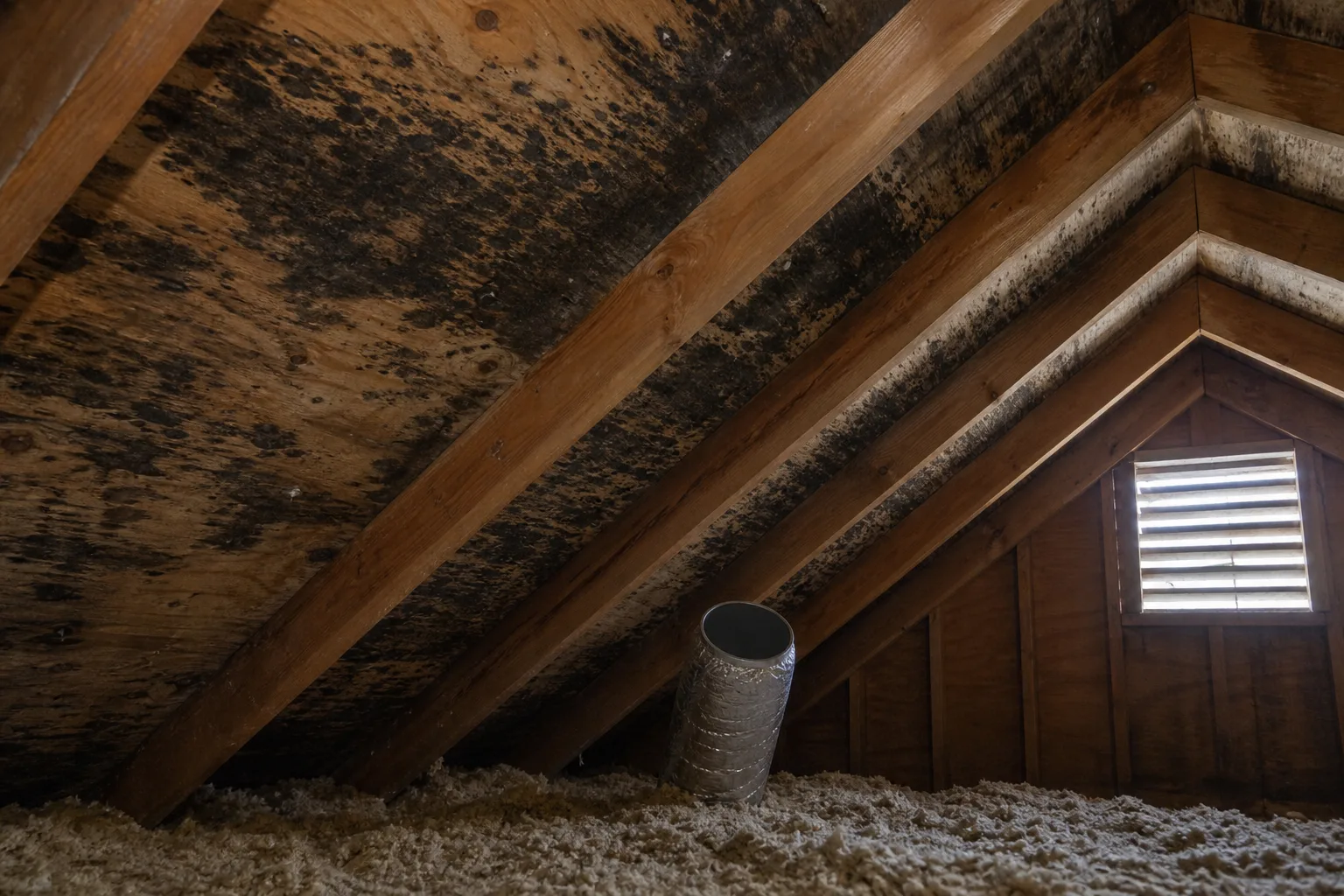
A leaking radiator fitting or a pipe through a joist bay wets the framing from the inside. Growth on joists and subfloor is covered in black mold on wood, and a wet cellar wall in black mold in a basement. Knee walls under a slate or tin roof wet the same way, which black mold in an attic covers.
Removal scope
What Black Mold Removal Covers in Pennsylvania Cellars
Professional black mold removal starts with a tarp-and-tape screen across the stairwell, so the work stays in the cellar and out of the rooms above. Wet plaster, lath, wainscot and stored goods with growth come out in sealed totes, and the exposed joists and sill plate are dried and brought back to clean wood.
Bluestone steps, coal chutes and cellar stairwells collect rain and hand it to the sill plate, so the scope reaches the stair stringers and the wall behind them when growth has reached that far. Stone and block stay in place, because masonry cannot be torn out like wallboard. The scope covers the surfaces and framing that hold growth, and the crack sealing belongs to a stonemason.
Black growth on a basement wall or joist in Pennsylvania? Call to connect with a local mold removal specialist.
(713) 979-1653How the call works
From a Thaw to Growth on the Joists
A late-winter thaw soaks the foundation, and by April your cellar wall has a white mineral crust and a musty odor. By summer damp air rides up the stairs, and growth reaches the bottom face of your joists and the back of the paneling.
Each winter adds material to remove. Your call at the first dark patch keeps your job to one wall instead of the whole cellar, and it saves your floor above.
Poconos cabins, Lehigh Valley twins and Pittsburgh hillside houses fail in different places: a cabin on piers wets the subfloor, and a hillside house takes runoff at its uphill wall.
Local detail
Pennsylvania Housing Age
Two of every three Pennsylvania units (66 percent) went up before 1980, and the median build year is 1966 (Census, 2024). That is decades of snow and thaw on most foundations. Nothing here is a legal opinion, so ask any specialist what rules apply to your job.
State rules and checks
Rowhouses, Twins and Farmhouses
A rowhouse or twin shares side-wall masonry, so water from the neighbor's roof or drain can wick into your side. Leave the owner next door a message, then ask for a specialist who serves your block.
A farmhouse brings a different path: a stone springhouse cellar, a dirt floor or an addition with no footing drain. See how US Black Mold Removal works, then call.
Leave it undisturbed
Stay Upstairs and Phone
Do not drag your stored cartons and rug scraps that carry growth through your house, because moving them throws it into your dry rooms. Turn off any fan that pushes air across the wall.
Homeowners in New Jersey mold removal face the same freeze-thaw cycle, and your order holds there too: stop the water, touch nothing and phone.
Common questions
Pennsylvania Cellar Answers
Why do Pennsylvania basements grow black mold?
Snowmelt and ice at the foundation wet the masonry through the winter, and a cold cellar dries slowly. Growth starts where your materials stay wet.
Does a stone foundation need to be removed?
No. Stone and block stay in place, and the scope covers the plaster, wood and finishes that carry growth.
Can plaster conceal black mold?
Plaster over lath holds water behind a dry-looking face. Growth often shows first on the joists below or the wall paint above.
Does the call cost anything?
The connection is free. You settle any work directly with the specialist you speak with.
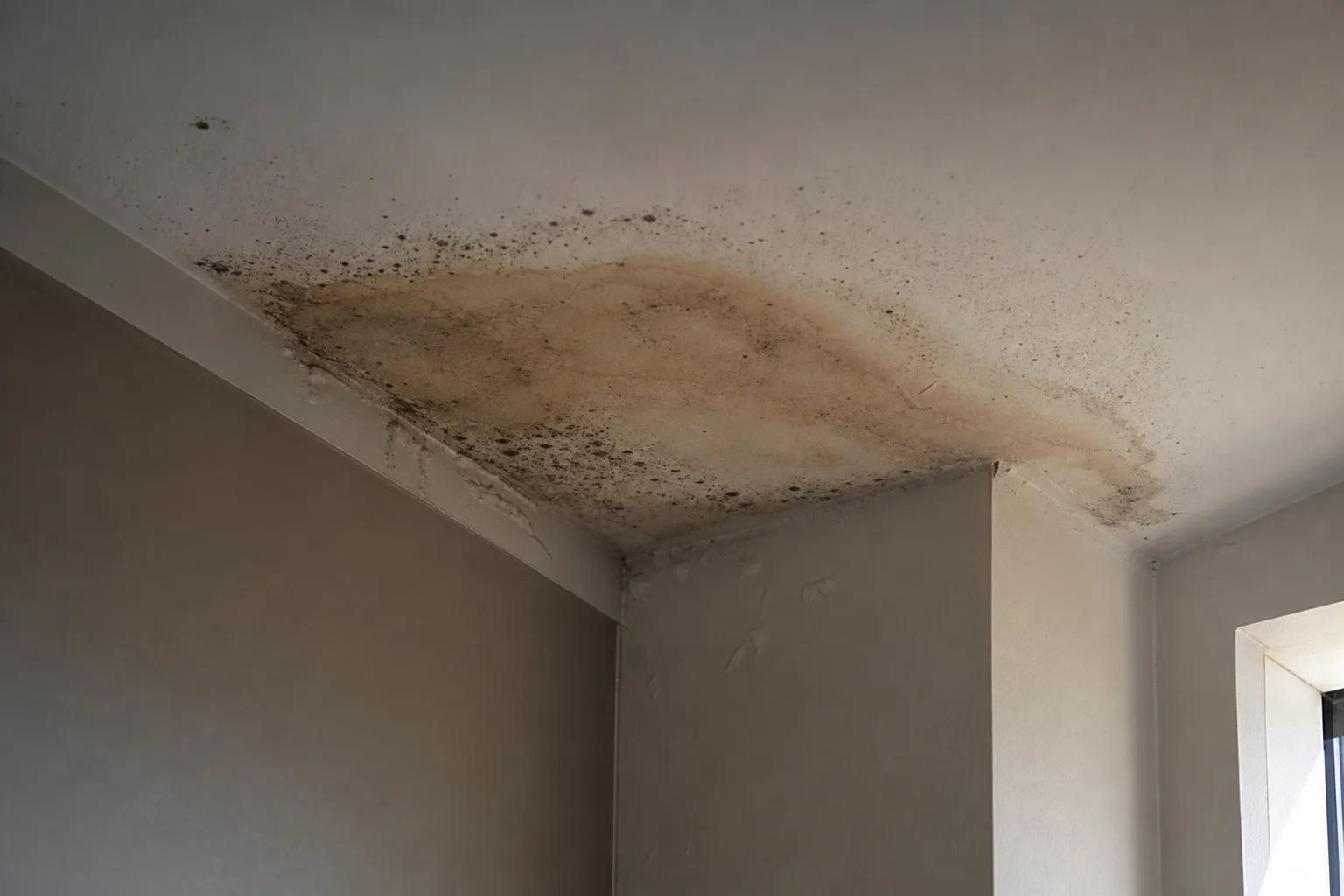
Black mold keeps spreading while the material stays damp.
Call before it reaches the next wall, the framing behind it or the room above.