
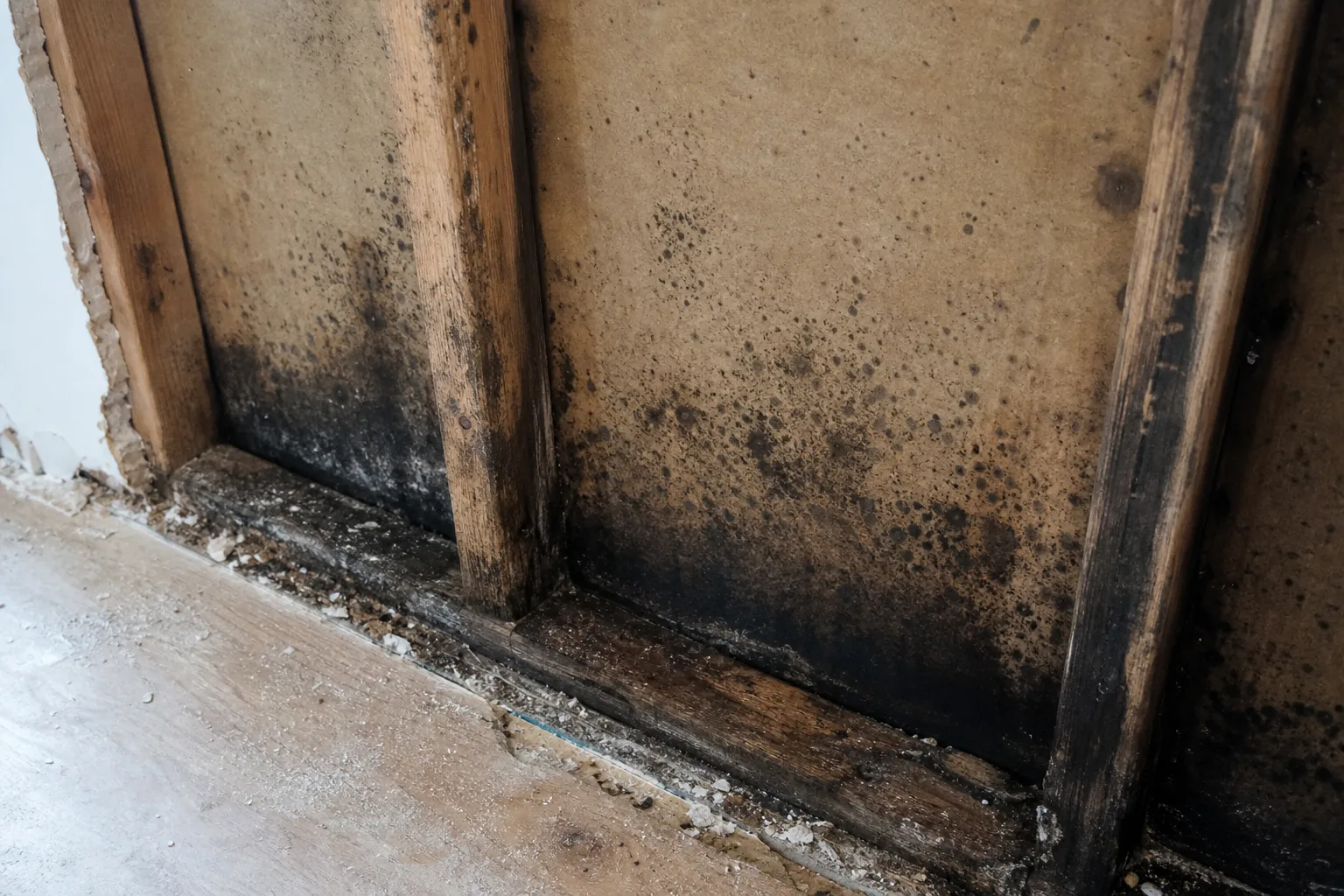
You find black streaks along the studs, a dark bloom on a joist, speckled trim or a ash-black film on the deck boards.
Guide · black mold removal
Black Mold on Wood
Black mold on wood shows as dark streaks, speckling or a ash-black film on studs, joists, trim or deck boards, and the growth runs with the grain into the board. Black mold on wood is a removal job for a local mold removal specialist, and one call connects you with one who serves your area. The connection is free.
Check your ZIP code
Enter the ZIP code of the property to see whether it is in the coverage area for mold removal connections.
Call (713) 979-1653What you are seeing
Dark Streaks on Your Studs, Joists and Trim
Raw lumber shows it first, while finished lumber hides the early stage behind its coating. A board that feels soft, flakes at the corner or smells earthy has more than a surface stain behind it.
A dark shadow under your varnish points the same way. On a deck, the board undersides darken first, where water sits against the framing.
What waiting costs
How Lumber Sustains Growth
Wood is a bundle of tiny tubes, and each one draws water up the grain, with sapwood and end grain at a cut or a split taking it up fastest. The cellulose in those fibers is what growth lives on, so a board that stays damp for weeks keeps the growth alive.
A leaking water line, a failed shingle, a cold wall that beads with water or a post that sits against wet soil keeps the water coming. The roots run into your lumber well past the dark patch you see, and kiln-dried framing gets no protection from that.
Housing and construction
What Rot Does to Structural Lumber
Growth that stays on a board long enough opens the way for rot, and rot takes the strength out of a joist, a sill plate or a rafter. A beam that looked dark for years can crumble where it rests on your foundation.
Thin material such as sheathing and trim fails first. Framing fails last, but it is the part that makes your job a rebuild, so a call at the first dark streak protects the load path the house stands on.
Dark streaks spreading along a board? Call to connect with a local mold removal specialist.
(713) 979-1653Removal scope
How Removal Treats Lumber
Removal separates sound wood from wood that has lost its strength. Boards that are soft or rotted are pulled out and bagged, and solid framing has the surface growth abraded off the face of the grain inside a closed work area.
Your water leak is closed and the lumber is dried before anything covers it. Replacement boards, sistered joists and fresh trim go to a carpenter once your wood stays dry.
State rules and checks
When Wood Is Replaced and When It Stays
Surface growth on thick, solid framing can often stay once it is removed and the wood is dry. Thin, layered pieces such as plywood, veneer and fascia usually come out, because growth runs between the plies.
Roof sheathing behaves the same way, as black mold in an attic explains for your roof deck. Ask each specialist which of your members stay and which go before the work gets under way. A written scope that names every board makes the rebuild predictable.
How the call works
From a Ashy Bloom to a Soft Joist
In the first weeks a damp board shows a ashy bloom. Within a season your dark streaks lengthen with the grain and the surface softens. After a year or more the fibers break down and the board gives under load.
Each step moves the job from the face of a board to the entire member. A call after the first streak keeps your work on the surface.
Leave it undisturbed
Leave the Wood Alone Until the Call
Do not sand, cut or pry at the board to see how deep it goes. Sawdust from affected lumber carries growth through your rooms, and a cut opens a path into the wall. Latch the door to the room and stay out of the area.
Decks, porches and crawl spaces in humid places such as mold remediation in Florida stay wet most of the year, and your lumber there darkens quickly. For the space under a floor, read black mold in a crawl space, then use the free connection to a local specialist when you see the first streak.
Common questions
Wood Mold Questions
Does black mold on wood mean my board is rotted?
Not always. Growth sits on the surface first, and rot follows when your wood stays wet for an extended stretch. Lumber that is soft or crumbling has already crossed that line.
Can varnish or stain hide mold on wood?
Yes. A coating seals the face and traps water behind it, so bubbling varnish or a dark shadow under the film points to growth underneath.
Is pressure-treated lumber safe from mold?
No. The treatment slows rot but does not stop growth on the surface, and your treated decking and posts still darken in damp conditions.
Which wood is replaced instead of kept?
Thin, soft or layered material usually comes out. Thick, solid framing is often kept once you have the surface growth removed and the wood is dry.
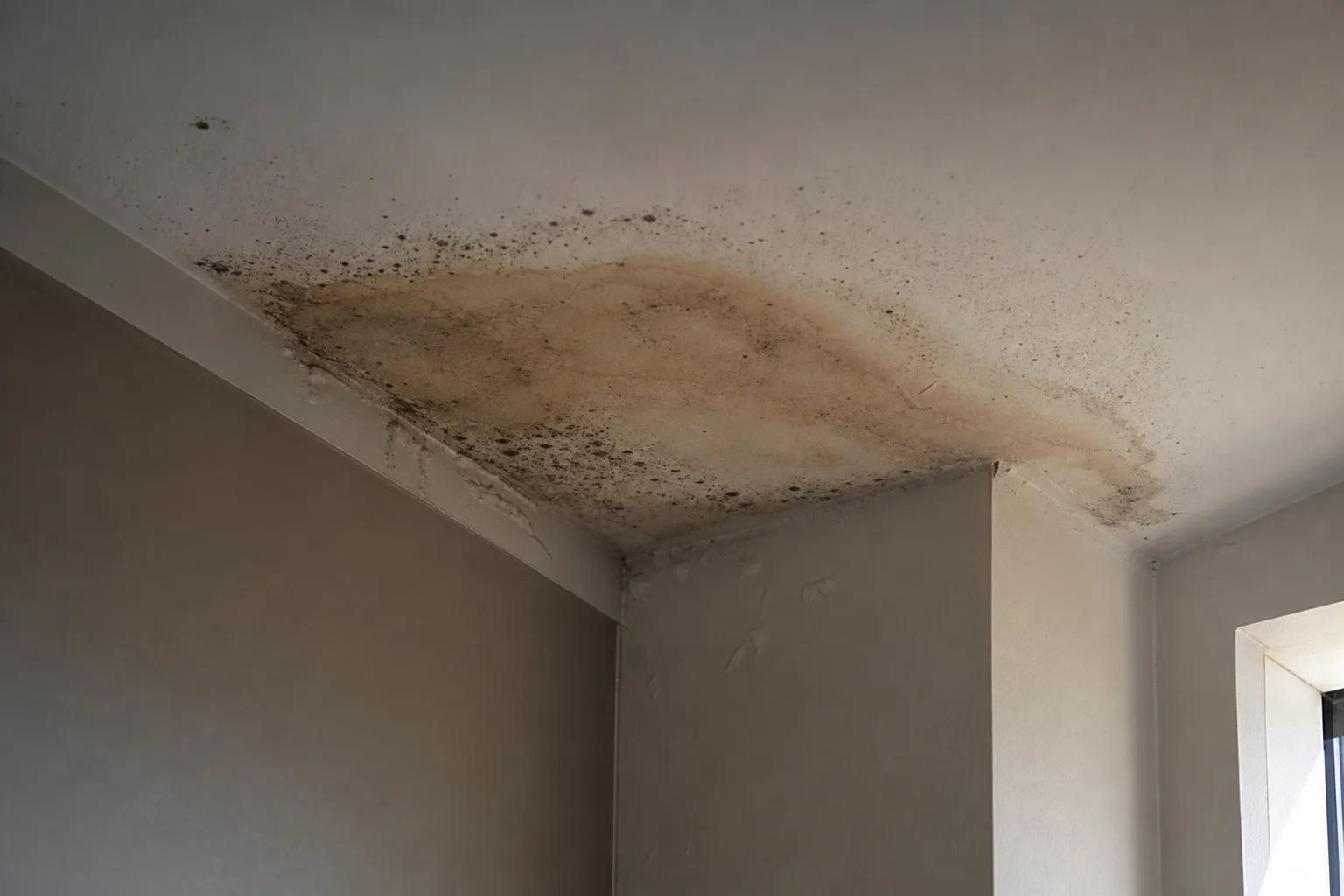
Black mold keeps spreading while the material stays damp.
Call before it reaches the next wall, the framing behind it or the room above.