
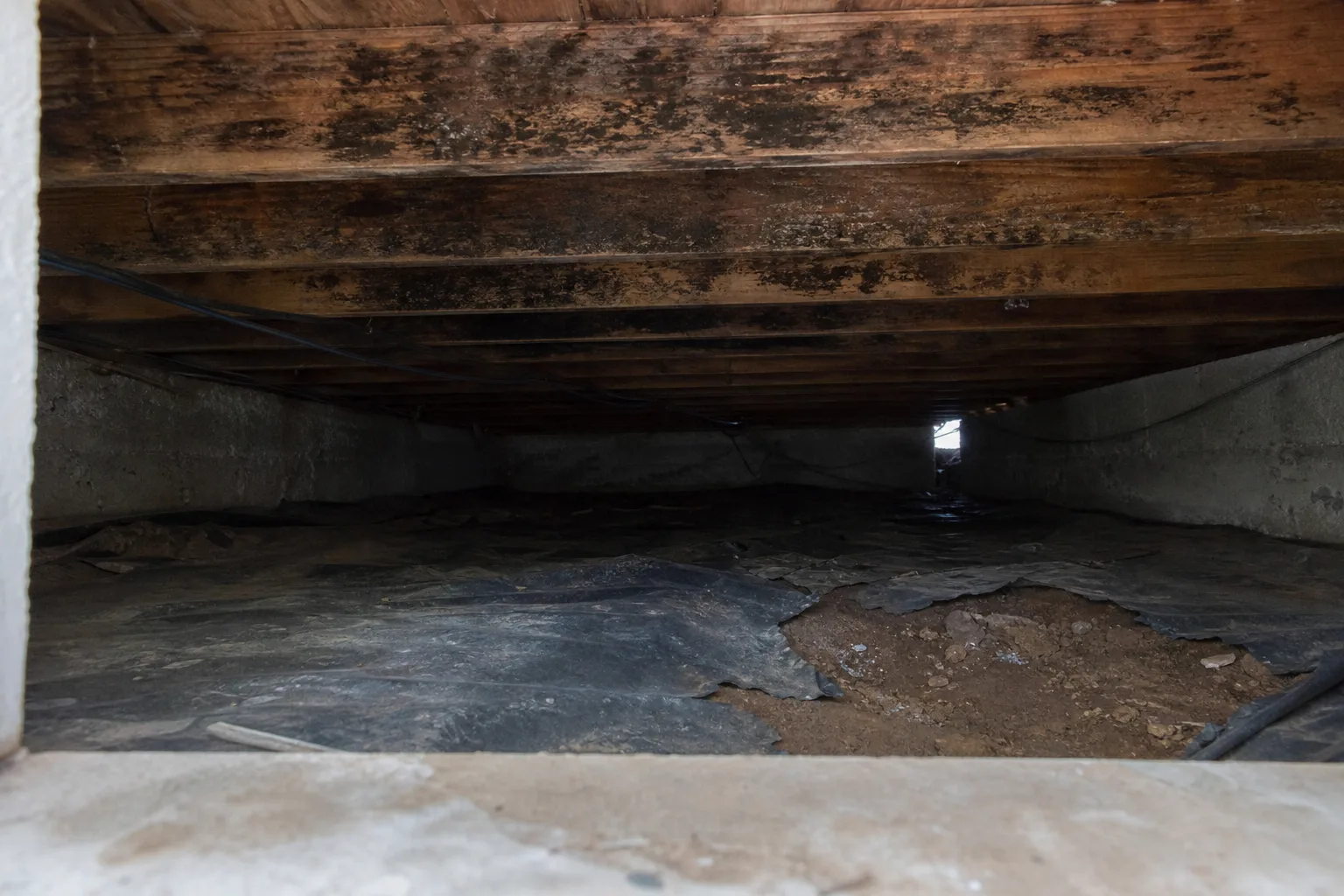
You find black growth or pale fuzz on the joists from the access hatch, a dark film under the subfloor or plastic liner that is wet and spotted. A stale smell at the floor registers and cold floors in winter often come with it.
Guide · black mold removal
Black Mold in a Crawl Space
Black mold in a crawl space shows as dark growth on the floor joists, the subfloor above and the plastic liner, and it draws on the damp soil under your house. Black mold in a crawl space is a removal job for a local mold removal specialist, and one call connects you with one who serves your area. The connection is free.
Check your ZIP code
Enter the ZIP code of the property to see whether it is in the coverage area for mold removal connections.
Call (713) 979-1653What you are seeing
Dark Growth on Joists, Subfloor and Sheeting
Insulation sags between the joists, and the pipes that run through the space wear the same growth. You rarely see the space itself, so the smell in the rooms is usually the first sign you get.
What waiting costs
Where Crawl Space Moisture Comes From
Bare soil breathes out water constantly, and open vents in the foundation let outside air in, where it beads on cooler joists and pipes. The dirt under the house holds far more water than the air above it.
A torn plastic liner, a weeping water line, a clogged downspout or a gutter that empties at the footing adds liquid water. The space gets no sun and little breeze, so what gets wet stays wet.
Housing and construction
What the Floor Above Takes On
Warm air rises out of the home in winter and pulls air up from the crawl space through the holes around the pipes and wiring. The odor in the hallway and kitchen traces back to the dark space beneath.
Growth on joists and subfloor softens your floor system, and wet insulation drops away from the framing. Your floors feel soft or bouncy near the wettest spot, and every month the wood stays wet adds to what you replace.
Doors that stick in their frames, a sagging hallway and cold floors in winter are the signs that the floor system has absorbed water.
Stale smell rising from under your floor? Call to connect with a local mold removal specialist.
(713) 979-1653Removal scope
How Removal Works Below the Floor
The access hatch and the foundation vents are sealed, so the air under your floor stays out of the rooms. Soaked insulation and ruined sheeting come out in sealed bags, and growth is removed from the joists and the subfloor. The soil is dried and the water path is closed before the space is put back together.
New insulation, liner and any carpentry go in through the trades that build them, so your crawl space ends the job drier than it began. Piers, rim boards and the girder under the floor get the same attention, while the pipes and wiring that cross the space stay where they are.
State rules and checks
Damp Air, Wet Soil or a Failed Pipe
A crawl space with standing water, a leaking line or a torn plastic liner needs the water source closed before anything else, and your scope names that source. A space that is only damp needs the moisture controlled as well as the growth removed.
If your house also has a lower level, read black mold in a basement for that part of the home. Either way, the free connection to a local specialist starts with one call.
How the call works
From a Stale Hatch to Bouncing Floors
Early on your hatch smells stale and the insulation sags. Later the joists carry visible growth and the plastic liner collects water. Eventually the subfloor softens and the pipes corrode.
Each phase enlarges the opening. A call at the first stale smell keeps removal on the surface of your joists.
Leave it undisturbed
Keep the Hatch Closed and the Floor Vents Shut
Do not crawl in to look, tear out wet insulation or open the hatch to air the space. Crawling through the space kicks growth into the air, and an open hatch draws it into your rooms. Keep the hatch closed.
Wet springs push water under a house, and owners in mold remediation in Ohio see crawl space moisture after every thaw and storm. Place the call when the smell first reaches your floors.
Common questions
Crawl Space Mold Questions
Can crawl space mold make my floors feel soft?
Yes. Growth on the subfloor and joists comes with wet wood, and wet wood loses stiffness. A soft spot near your hatch or a plumbing line marks the wettest area.
Do the foundation vents stay open?
Do not touch them until removal begins. Your specialist seals and manages the vents as part of the work.
Does the plastic liner get replaced?
A torn or wet sheet comes out with the ruined insulation, and new liner goes in after your soil is dry.
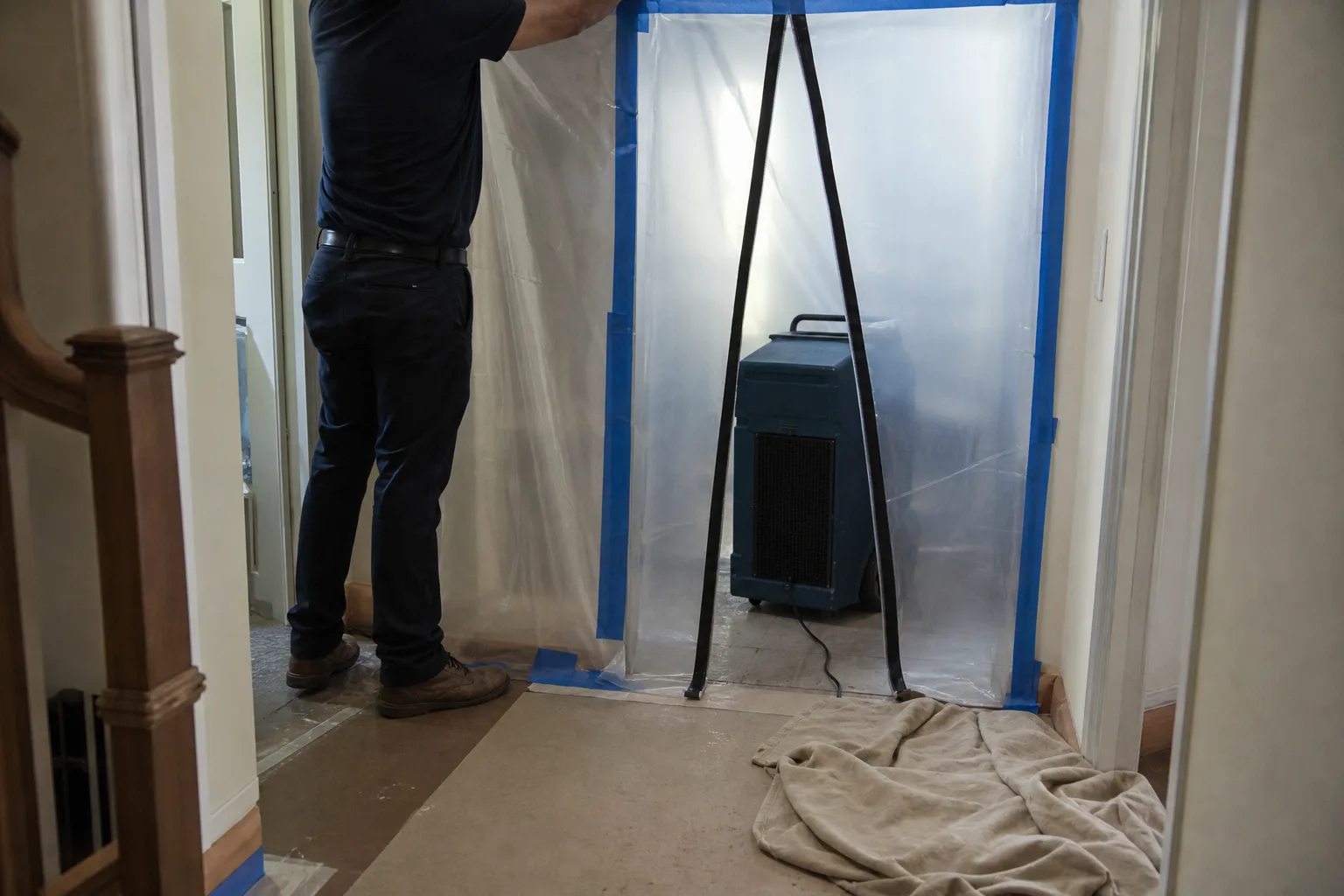
Black mold keeps spreading while the material stays damp.
Call before it reaches the next wall, the framing behind it or the room above.