
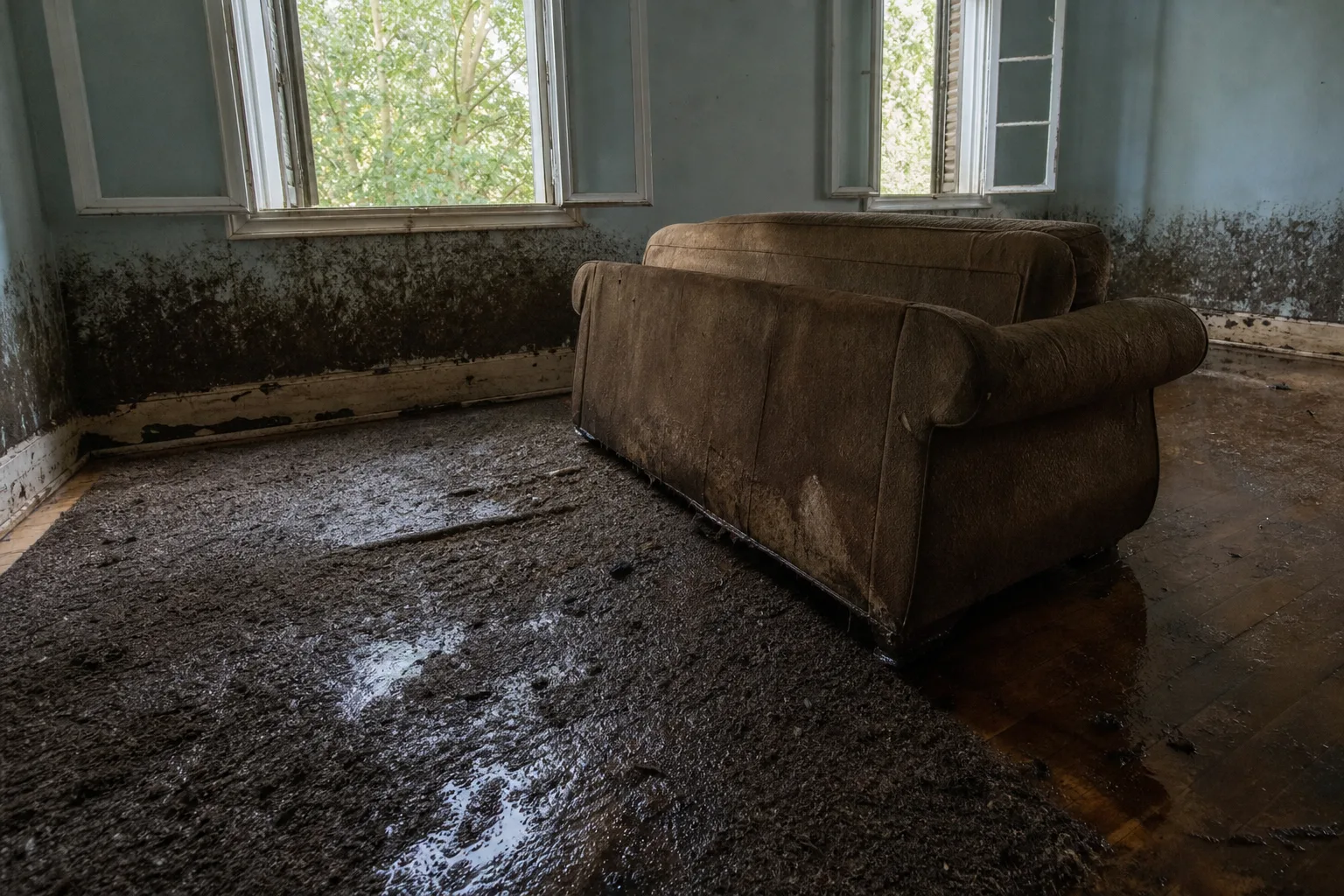
You notice dark spots spreading across wet carpet, a ceiling stain that keeps darkening or a baseboard rimmed with growth after the water went down.
Guide · black mold removal
Emergency Mold Removal
Emergency mold removal starts with black growth on carpet, drywall or ceiling that a flood, a burst pipe or a roof failure soaked. Emergency mold removal is a job for a local mold removal specialist, and one call connects you with one who serves your area. The connection is free.
Check your ZIP code
Enter the ZIP code of the property to see whether it is in the coverage area for mold removal connections.
Call (713) 979-1653What you are seeing
Black Growth After a Flood or Burst Pipe
Your rugs, the sofa and any boxes that sat in the water carry it too, and a mattress or a recliner on the floor soaks up the water and darkens within days.
The standing water may be gone, but the carpet pad, the wall cavity and the cabinet kick plate still hold it. That is where growth takes root, and it is where the removal job lives.
What waiting costs
Why Soaked Materials Grow Mold Within Days
Drywall paper, carpet pad, wood trim and insulation soak up water and release it slowly. Growth begins on that damp material within days, and each extra day enlarges what you tear out.
Floodwater and sewage backups leave silt on every surface they touch, so the materials leave the house sooner. A clean line failure usually keeps the job smaller.
State rules and checks
Water Extraction Versus Mold Removal
Pumping out standing water and setting up drying belong to the water mitigation trade, and that work runs first or alongside.
When growth already sits on the carpet or wall, emergency water and mold removal needs the removal side too, because drying alone does not take out what has grown.
A plumber or roofer closes the source, and a mold removal specialist handles the growth and the ruined material. Tell the specialist what failed and when you saw it.
Removal scope
What Urgent Removal Covers
The wettest rooms are sealed off with plastic sheeting so growth stays out of your dry rooms. Saturated carpet, pad, drywall and insulation are torn out and bagged, and the framing that remains is dried.
The scope runs room by room and begins with the space that took the most water. Opened walls and floors go to the trades that rebuild them once they are dry, so your repair starts on a sound surface.
Hardwood boards cup and lift, so they come up before the subfloor underneath can dry. Tile and vinyl flooring come up the same way when water sits under the seams.
Black growth spreading after a flood or burst pipe? Call to connect with a local mold removal specialist.
(713) 979-1653How the call works
The First Days After the Water
On day one your carpet is soaked and the drywall has wicked water up the wall. By day three the paper facing and the pad show dark spots.
After a week growth reaches the framing, and the odor spreads to rooms the water never touched. Each day moves your job from removing wet finishes toward removing structure. A small black mold on drywall patch stays small if you call early.
Housing and construction
What an Early Call Protects
Cabinet bases, hardwood and trim hold water long after the surface looks dry, and they turn from a repair into a replacement. Your belongings go next, because you cannot dry cardboard, books or upholstery back to sound.
Photograph your damage before anything moves, and keep the plumber's or roofer's paperwork with the photos. Early removal keeps the floors and cabinets in the repair column. A roof failure carries water the same way, as black mold in an attic explains.
Leave it undisturbed
Leave Everything Alone Until the Call
Latch the door to the wet room, and do not carry soaked carpet or boxes through your house. Hauling them spreads growth into the dry rooms. Switch off anything that pushes air through the wet space.
Close the water main if a pipe failed, then make the call. Owners in mold remediation in New Jersey follow the same order: stop the water, leave the growth alone and connect with a specialist.
Common questions
Emergency Mold Questions
Does emergency mold removal include pumping out the water?
Pumping and drying belong to water mitigation. The mold removal side handles the growth and the ruined material, and your specialist tells you where each job ends.
How soon does mold appear after a flood?
Growth can start within days on wet drywall and carpet pad. The longer your material stays wet, the more of it comes out.
Can I wait for the surface to dry?
A dry surface can sit over a wet wall cavity. Growth you can already see does not leave when your air dries.
Does a burst pipe or a sewage backup change the work?
Sewage and floodwater leave residue on every surface, so more material comes out. A clean-water failure often keeps your job smaller.
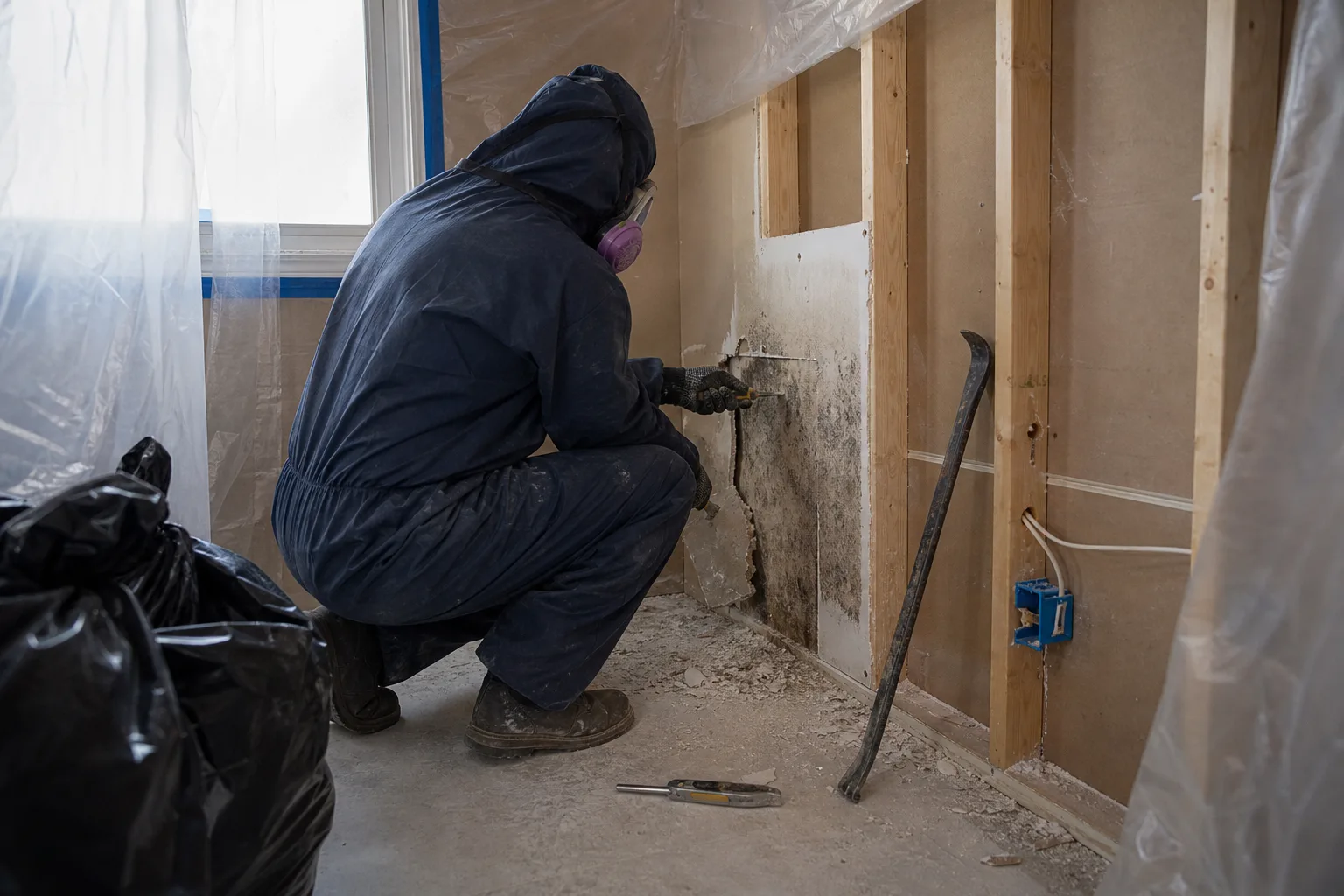
Black mold keeps spreading while the material stays damp.
Call before it reaches the next wall, the framing behind it or the room above.